
Senior Portraits
Editorial Senior Pictures: What “Creative” Actually Means
Editorial senior pictures are senior portraits planned and lit the way a magazine feature is: a concept decided before anyone picks up a camera, a location chosen as a set rather than a backdrop, wardrobe built for that set, deliberate light, and direction that produces a mood instead of a pose. The test is simple. An editorial image says something specific about the senior in it. A traditional portrait records what they look like. Here is what that means in practice, what the magazines actually score, and how I build a session around it.
What “Editorial” Means When It Is Not a Buzzword
The word gets attached to every senior session on the internet now, so it is worth going back to what it originally meant. Adobe's own definition puts it plainly: traditionally, editorial photography means the images that accompany an article in a publication, but editorial images can also exist on their own and imply a narrative or outline a creative concept. What distinguishes it from advertising, in the same source's words, is that there is an element of storytelling to it.
That is the whole idea. A magazine photographer is not sent out to record what a person looks like; they are sent to make a picture that says something about who that person is. Everything in the frame — the place, the light, the clothes, the pose — is chosen to serve that one sentence. Take the sentence away and you are left with a nice photo of someone standing somewhere.
I know the other kind well, because I have one. When I sat for my own senior portraits, every girl in my class wore the same pearls and the same drape, and the boys wore the top half of a suit. Our family photographer shot a few extra frames on film, and they had to be safe, because film left little room for error. Very nineties, lots of hairspray. It was documented, and I am glad it was. But it did not say anything about me, and that is the gap an editorial session is built to close.
The Nine Things a Magazine Judge Actually Scores
“Creative” is vague, so here is a concrete version. Senior Muse Magazine, one of the industry's senior-portrait publications, runs an annual 50 to Follow contest in which every submitted image is scored by a panel of judges against nine published criteria. Those criteria are a better definition of editorial senior pictures than any photographer's marketing copy, mine included, because they are what the people who put senior work on a magazine page are actually looking for. In plain terms, they are:
- 1Impact. Does the image stop you? Before anyone notices the outfit or the location, an editorial portrait has to make you look twice.
- 2Technical aspects. Focus where it belongs, exposure that holds detail in both a white top and a dark jacket, color that looks like real skin.
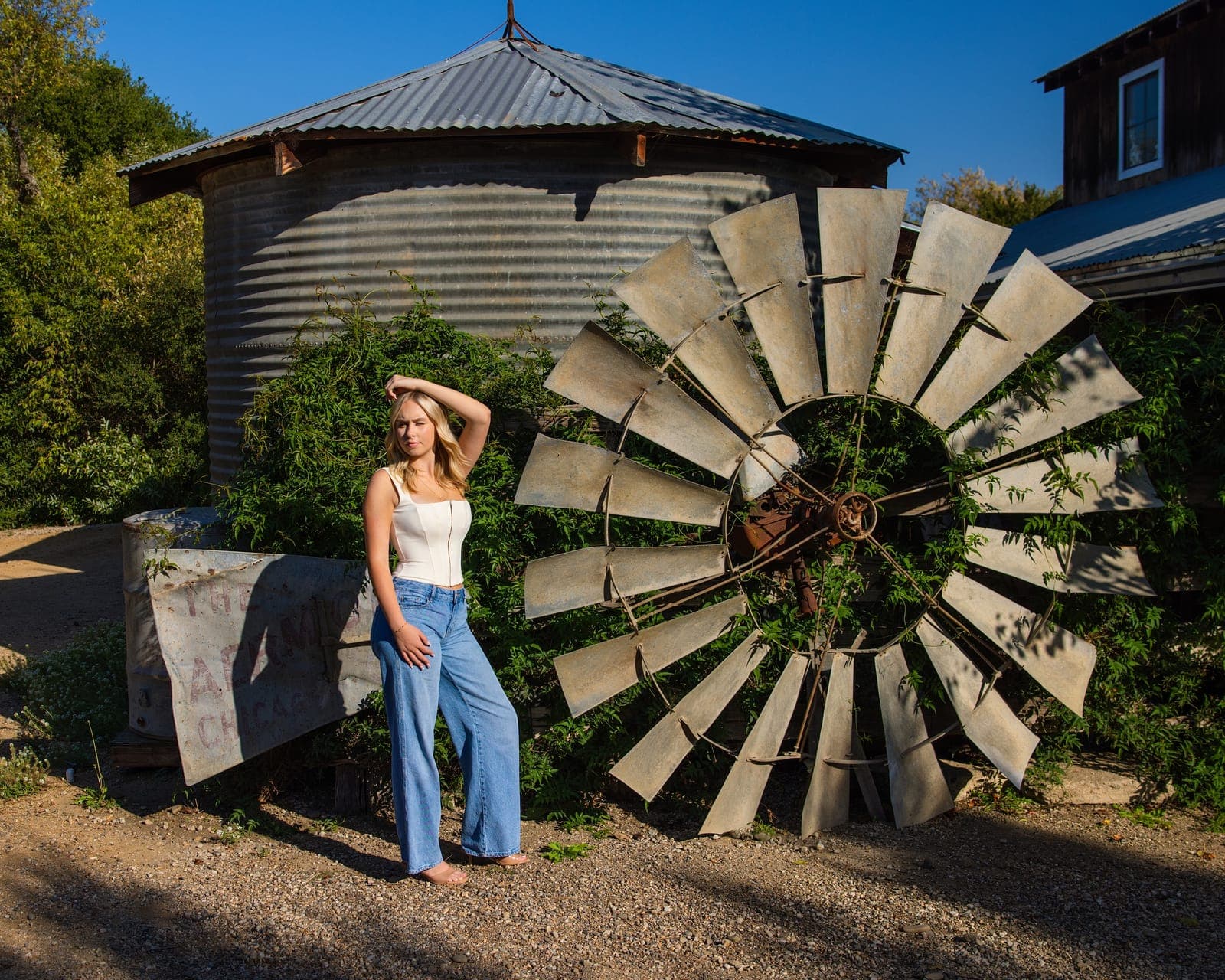
- 3Creativity. The idea behind the frame. A dealership, a pool, a rusted windmill, a dance studio — a concept that could only belong to this senior.
- 4Style. A consistent point of view from the first image to the last, so the finished set looks like one photographer's work and not a collection of trends.
- 5Composition. Where the senior sits in the frame, what leads your eye to them, and what has been deliberately left out.
- 6Lighting. The choice between soft window light and hard late-afternoon sun, and the skill to use either one on purpose rather than by accident.
- 7Posing. Direction that reads as natural — weight shifted, hands with a job to do, an expression that belongs to the moment instead of to the camera.
- 8Center of interest. One clear subject. Everything else in the frame supports the senior; nothing competes with them.
- 9Storytelling. The image says something specific about who this person is right now. This is the whole reason editorial exists.
I mention the contest because I have been through it. My submissions made Senior Muse's 50 to Follow list in 2026, the first year I entered, and my senior work has been published in the magazine's Issues 31, 33, 40 and 41 — the spreads are on my In the Press page if you want to see what the judges saw. The point is not the award. The point is that when I say a session is editorial, there is a checklist behind the word, and it is not one I made up.
How an Editorial Senior Session Is Built
The difference between an editorial session and a regular one happens mostly before the session. It starts with a consultation, where I learn who you are — the sport, the instrument, the car, the dog, the places you actually spend your time — and we build a concept from that instead of from a location list. My background is a degree in Graphic Communications and years as an art director, and this is the part of the job where that shows: an art director's first question is never “where should we shoot,” it is “what is this picture about.”
From the concept come the decisions. The location is chosen as a set — a dealership showroom, a barn and windmill, a downtown alley, a pool, or one of the staging areas in my Grover Beach studio. Wardrobe is planned for the set rather than packed at random, and I recommend professional hair and makeup because the difference on camera is real. The time of day is picked for the light the concept needs: hard, low afternoon sun on rusted metal is a completely different picture from soft window light on a clean backdrop, and neither is an accident.
On the day, I direct every frame. Where your weight sits, what your hands are doing, where you are looking, when to hold still and when to move. You do not need to know how to pose, and you are not expected to. You are, however, part of the creative process — I want your ideas, and the sessions that end up in magazines are the ones where the senior brought something of their own. I am also a big believer in dumb jokes. I am not afraid to look silly if it helps everyone else feel comfortable, and I meet people where their personality is rather than trying to talk a quiet senior into being loud.
Sessions run one and a half to two hours, sometimes longer when we are moving between several sets or looks, and I never rush them. Editorial needs time at each set to get the light and the direction right. If you are trying to work out when that session should happen, my guide to when to book senior photos works the calendar backward from local yearbook deadlines.
Seven Editorial Senior Picture Ideas That Work on the Central Coast
These are not a menu — the whole point is that your concept comes from you — but they show the range of what “editorial” can mean here, and every one of them is a set I have actually used.
- 1Your car, photographed like an ad. A senior sitting inside a Porsche at the dealership is one of my favorite sessions, and it works just as well with the truck you actually drive — the trick is treating the vehicle as a set, not a prop in the corner.
- 2Underwater. With underwater camera equipment and weighted vests, seniors have posed beneath the surface of the pool at Santa Maria's Paul Nelson Aquatic Center. Flowing fabric, weightless movement, and light that looks like nothing you can make on land.
- 3Your sport, shot like a campaign. Not an action snapshot from the sideline — a lit, directed portrait in the uniform, with the field or the gym as the set and the expression of someone who has put years into it.
- 4The ranch, the vineyard, the barn. The Central Coast is full of agricultural sets — corrugated silos, weathered windmills, rows of vines — and hard afternoon sun on rusted metal is about as editorial as light gets.
- 5Downtown San Luis Obispo. Higuera Street storefronts, the alley art, and the industrial textures of the Railroad District give an urban, magazine-cover feel that the beach cannot.
- 6The studio, with nothing else in the frame. A clean backdrop, one hard light, and a senior who has been directed into a pose with real presence. When the concept is simply you, this is the set.
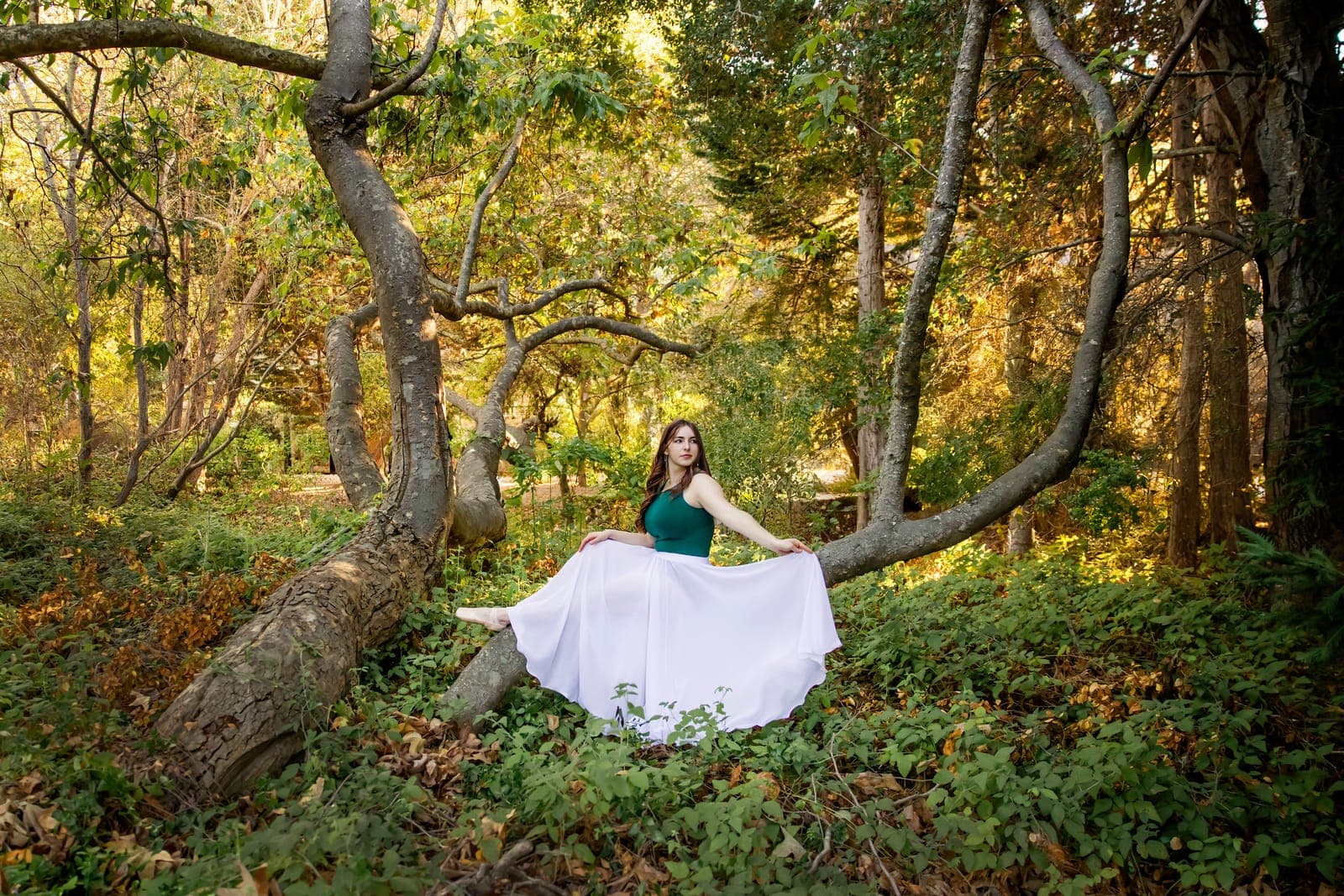
- 7The thing you do. A dancer on pointe in a grove of oaks, a musician with the instrument, an artist in the studio, a rider with the horse. The most personal editorial portraits are built around what a senior has spent their high school years becoming.
Three of these have their own pages, because they are different enough to plan differently: underwater senior portraits, sports senior portraits, and in-studio senior portraits. For the downtown sets, my best photo locations in San Luis Obispo guide covers Higuera Street, the alleys, the Railroad District and the permits each one needs.
Four Things Editorial Is Not
Because the word is everywhere, it is worth being clear about what does not qualify.
- •A pose copied from someone else's board. If the idea belongs to a stranger, the picture will look like it belongs to a stranger.
- •Heavy editing standing in for a concept. Skin that has been smoothed into plastic and colors pushed into orange are not a style; they are what people do when the frame did not have an idea in it.
- •A look you have never once worn. Editorial wardrobe should be a stronger version of you, not a costume — if you would not recognize yourself, neither will anyone else.
- •Ten locations in ninety minutes. Editorial needs time at each set to get the light and the direction right. Two or three good sets beat a checklist.
None of this means serious. Some of my most editorial frames are a senior laughing at a joke I made at my own expense. Editorial means intentional, not solemn — the light, the set and the direction were decided, and the expression is the one real thing in the middle of them.
What You Take Home
An editorial image is designed to be looked at large. That is the format it was invented for — a page, not a phone screen — and it is why I finish senior sessions as artwork rather than a folder of files. After the session, you come back to the studio to see your images on a large screen and choose what you are actually going to keep: a wall portrait for the house, a designer album that holds the whole set in order, and custom graduation announcements built from your own frames. Every portrait you select for purchase comes with a companion phone-size digital image, so the picture on the wall is the same one you post. What the finished pieces can be is on the wall art and products page, and the way the whole process runs, from consultation to reveal, is on the experience page.
If you want to see the work before you decide, start with senior portraits, then the location pages for San Luis Obispo, Pismo Beach and Arroyo Grande. When you are ready to talk about a concept, that is what the consultation is for. Bring the idea you think is too much. Those are usually the good ones.
Sources
- Adobe — What is editorial photography? (“Traditionally, editorial photography means the images that accompany an article in a publication. But editorial images can also exist on their own and imply a narrative or outline a creative concept”; “What distinguishes it from advertising is that there's an element of storytelling to it”)
- Senior Muse Magazine — 50 to Follow contest (judging criteria: “Impact • Technical Aspects • Creativity • Style • Composition • Lighting • Posing • Center of Interest • Story Telling”; “The Top 50 Photographers will make the seniorMUSE ‘50 to Follow’ List”)
- Santa Maria Sun — “A Central Coast photographer receives recognition from a national magazine's photo contest” (Madison White, June 11, 2026) (Amy Marlan's submission to Senior Muse's annual 50 to Follow contest made the list in her first year entering; the pearls-and-drape senior portraits of her own class; dealership and arcade sessions; underwater sessions at Santa Maria's Paul Nelson Aquatic Center with underwater camera equipment and weighted vests; two staging areas at the Grover Beach studio; “They get to be part of the creative process”)