
Wall Art & Products
Canvas Prints vs. Framed Photos
Choose canvas when the piece is large, the room is casual, the wall fights you with glare, or the image is wide and atmospheric. Choose a framed print when the photograph is a close portrait, when fine detail matters, when the room is formal, or when you want the piece to outlive you — because a frame is the only one of the two that can put UV-filtering glazing between your photograph and the light. Both are archival when they are made properly. They are simply good at different jobs, and the wall usually decides.
What Each One Actually Is
A canvas wrap is your photograph printed onto a woven canvas, stretched over a wooden stretcher frame, and finished with a protective coating. The image continues around the sides, which is where the name gallery wrap comes from. There is no glass, no mat and no molding. It arrives as a single object, usually an inch and a half deep, ready to hang on a nail.
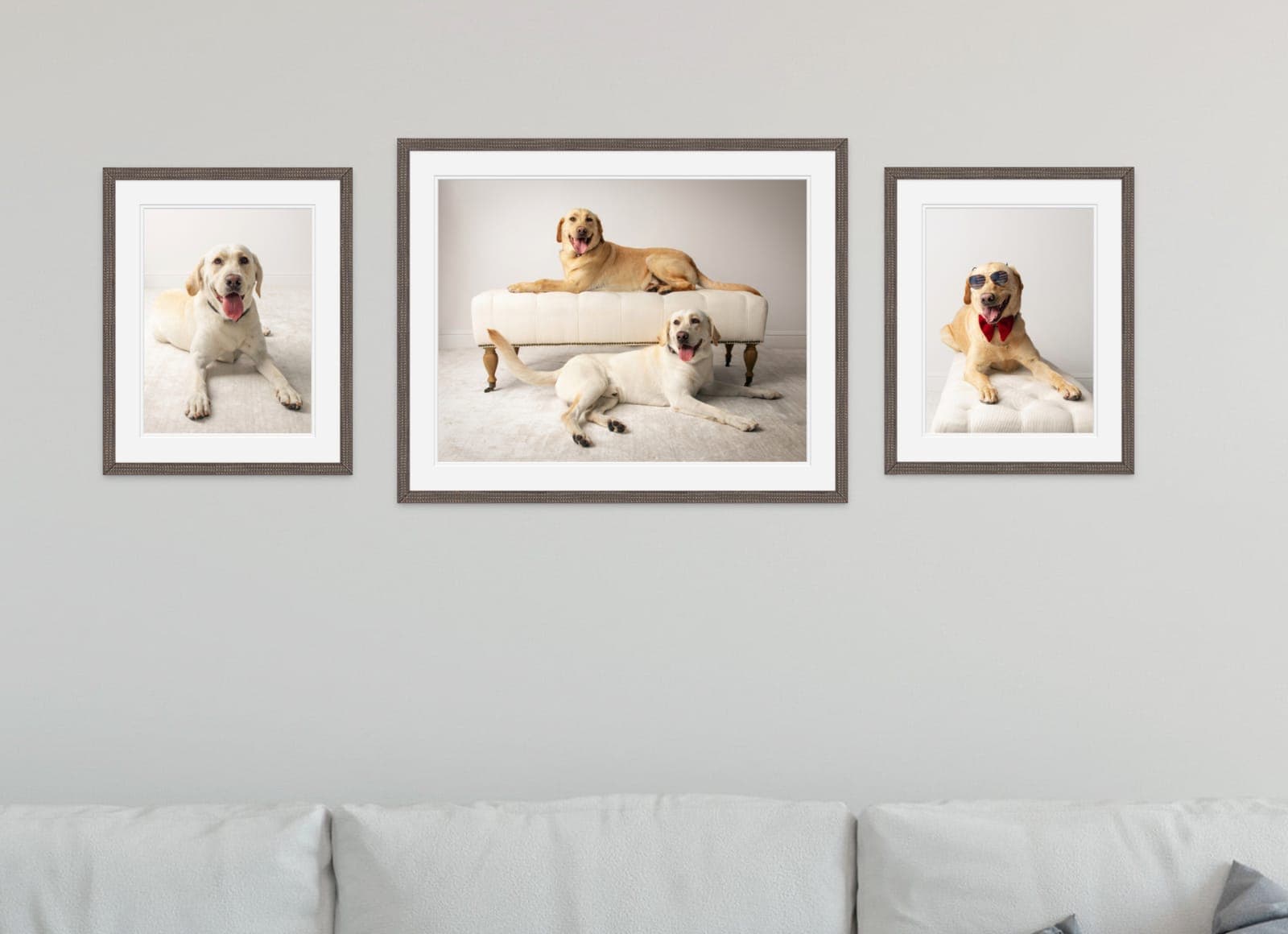
A framed print is your photograph printed on a smooth fine art or photographic paper, mounted to a backing board, usually surrounded by a mat, and sealed behind glazing inside a molding. The mat is not decorative padding — its depth is what keeps the glazing off the surface of the print. Conservators are blunt about this: the Northeast Document Conservation Center states that objects should never be in contact with the glazing surface, because if moisture condenses on the inside of the frame, anything touching it risks becoming stuck to it.
Those two descriptions already contain most of the decision. One is an open object with texture. The other is a sealed package with a protective layer. Everything below is the detail.
Side by Side
| Factor | Canvas wrap | Framed print |
|---|---|---|
| Surface | Woven textile with visible texture and a matte, non-reflective face | Smooth fine art or photographic paper behind glass or acrylic glazing |
| Fine detail | Softened slightly by the weave; excellent at viewing distance | Sharpest option — best for tight portraits and black and white |
| Glare | Effectively none | Depends on glazing; anti-reflective options cost more |
| Weight | Light even at large sizes | Heavier, and glass adds significantly more weight than acrylic |
| Edges | Image wraps around the stretcher bars; a band of the photo leaves the front | Full image stays visible; a mat adds breathing room around it |
| UV protection | Protective coating only — no glazing | UV-filtering glazing available at 99 percent or better |
| Best rooms | Family rooms, hallways, offices, glare-heavy walls, large formats | Entryways, dining rooms, studies, bedrooms, heirloom pieces |
Both options in my studio are printed by professional labs on archival materials and color-matched before they ship. The differences in this table are inherent to the two formats, not differences in quality.
The Glazing Difference Nobody Mentions
This is the argument that actually separates the two, and it almost never comes up in a showroom.
NEDCC calls glazing an essential component of the frame package for works on paper and photographs, and adds a warning most people have never heard: normal glass and regular acrylic glazing do not block UV radiation. If you want the protection, you have to ask for it by name. NEDCC recommends selecting a product with a high UV-filtering capacity, at least 99 percent, and names Tru-Vue Conservation Clear glass and Acrylite OP-3 acrylic as examples. Glass is generally less expensive and is a true vapor barrier, but it is much heavier and can shatter; acrylic is lighter, comes in larger sizes, and scratches more easily.
A canvas wrap has no equivalent. What it has instead is a protective coating applied over the printed surface, which does a genuinely useful job — it seals the ink and the fabric against dust, moisture, fingerprints and minor abrasion — but it is not a conservation-grade UV filter, and nobody should sell it to you as one. If a photograph is going on a wall that gets direct afternoon sun through a west-facing window, that difference is worth caring about.
How Long Each One Lasts
The honest answer is that the printing process matters far more than whether the result ends up on canvas or behind glass, and the published numbers are wider apart than most people expect.
Henry Wilhelm, whose lab has run accelerated print-permanence testing for decades, rates pigment inkjet prints made with Epson's UltraChrome HD and HDX inks at display permanence of up to 200 years depending on the paper, and black and white prints on some papers at up to 400 years. By contrast, Wilhelm's display permanence ratings for Kodak Endura silver-halide papers — a common traditional photographic print — are generally less than 20 years on display. ChromaLuxe metal prints land in between at ratings on the order of 50 years. Those figures assume prints kept in moderate environments and not subjected to prolonged high humidity, high heat or direct sunlight.
The practical takeaway is not to memorize numbers. It is to ask any photographer what a piece is actually printed with, because “archival” is not a regulated word and the gap between 20 years and 200 years is a real gap.
Where you hang it matters just as much. The Library of Congress puts it plainly: damage caused by light is cumulative and depends on the intensity, length of exposure and the wavelength of the radiation, with blue visible light and UV being the most damaging, and sunlight and standard fluorescent light both strong sources of UV. Museums manage this by keeping exhibit light levels between 30 and 100 lux and rotating what is on display. You are not going to run a lux meter in your living room, and you should not have to. But keeping a portrait off the one wall that takes four hours of direct sun a day is free, and it does more for the piece than any upgrade you can buy.
What a Gallery Wrap Does to Your Image
This is the part that surprises people, so it is worth being specific. On a gallery wrap, the photograph does not stop at the front face. It continues around the sides of the stretcher bars, which means a band of your image is no longer visible when you look at the piece straight on.
How much? On a standard 1.5-inch wrap, roughly the outer inch and a half of every edge goes around the corner. One commercial lab's published spec for a 1.5-inch gallery wrap asks for 1.75 inches of bleed on each side, and gives the example of submitting a 15.5 x 15.5 inch file to produce a finished 12 x 12 inch wrap. Multiply that across a large piece and it is a meaningful amount of photograph.
None of this is a problem when it is planned. It is a problem when it is not. An image with a child's hand, a dog's tail or the edge of someone's shoulder sitting close to the frame edge may simply be a better framed print — or it may need to be photographed a little wider in the first place, which is one of the reasons I ask during the consultation where a piece is going before I photograph it rather than afterward.
When Canvas Is the Right Answer
- Large statement pieces. Canvas stays light at big sizes, so a 40 x 60 over a sofa hangs on standard hardware instead of requiring a stud and a heavy-duty hanger.
- Wide, environmental images — the beach, the ranch, the family walking away down a trail — where surface texture adds atmosphere rather than competing with detail.
- Casual rooms: family rooms, hallways, kids' rooms, a home office wall you see on video calls all day.
- Rooms with strong window glare. There is no glazing to reflect a window back at you, which is a real advantage on a wall opposite a slider.
- Groupings of the same size, where matching frames would get expensive fast and the uniform depth of canvas keeps the arrangement calm.
- Homes with young children and dogs, where a frameless piece with no glass is simply one less thing to worry about.
When a Framed Print Is the Right Answer
- Close portraits. Faces, hands, eyes and hair are where the detail difference between smooth paper and woven canvas is most visible.
- Formal rooms — a dining room, an entryway, a study — where a mat and a molding do real work in finishing the piece.
- Anything you intend to keep for generations. Glazing is the only practical way to put a UV filter between a photograph and the light in the room.
- Black and white work, which tends to reward the deeper blacks and finer tonal separation of a fine art paper.
- Walls where the frame is part of the decor and needs to relate to existing millwork, furniture finishes or an existing gallery wall.
- Images with important content near the edge, where a gallery wrap would carry that content around onto the sides.
Where Metal and Acrylic Fit In
Canvas and framed prints are the two most people are choosing between, but they are not the only options, and sometimes the right answer is neither.
Metal prints infuse the image directly into a coated aluminum panel. They are luminous, extremely durable, and hold up in rooms where humidity swings — which is why they suit bright, modern spaces and are the one option I will happily put near a kitchen. Acrylic prints mount the image behind polished acrylic, which gives an unusual sense of depth and makes color look lit from within. Both are glossier than canvas or a matte paper, so both are more sensitive to where the windows are.
All four surfaces, along with heirloom albums and gift prints, are described in more detail on the wall art and products page.
Sizing and Placement
Whichever surface you choose, the most common mistake is going too small. The standard design guideline is that wall art should span roughly two-thirds the width of the furniture below it, with the center of the piece hanging at about 57 to 60 inches from the floor and the bottom edge sitting 6 to 8 inches above the sofa back. On a 90-inch sofa, two-thirds is about 60 inches of artwork — which is dramatically larger than what most people picture when they say “something for above the couch.”
Resolution is rarely the limiting factor at those sizes when the file came out of a professional camera, which I covered in more detail in professional photographer vs. iPhone. The limit is almost always nerve. That is why I do not ask clients to imagine it — during the design appointment I build mockups on a photograph of your actual wall, at actual scale, so the 30 x 40 and the 40 x 60 are sitting side by side in your own living room before you commit to either one.
How I Actually Decide With Clients
In practice I do not start with the surface. I start with three questions: which wall, what light hits it, and how close will people stand.
A wide hallway you walk past at four feet is a different problem from a dining room where guests sit six feet from the wall for two hours. A north-facing wall with even light will take a glossy acrylic beautifully; a wall opposite a west-facing slider will turn any glazed piece into a mirror at five in the afternoon. And a close portrait of a senior or a grandparent, printed on smooth paper behind conservation glazing, will show detail that the same image on canvas simply will not.
This is the part of the process my clients tell me they value most, and it is the whole reason the studio works the way it does. You can read how a session moves from consultation through the reveal and design appointment to installation on the experience page.
Where to Go Next
If you are still working out what a full-service session involves and what it costs, my guide to how much a family photographer costs explains the difference between a session fee and a finished total, which is exactly where wall art enters the conversation. If you are choosing a photographer rather than a product, how to choose a family photographer is the checklist I would use myself.
And if you already know the images you want on the wall are portraits of your family, family photography covers what a session includes and where we can photograph across the Central Coast.
Sources
- Northeast Document Conservation Center — Preservation Leaflet 4.10: Matting and Framing for Works on Paper and Photographs (glazing described as “an essential component of the frame package”; “Objects should never be in contact with the glazing surface”; “Normal glass and regular acrylic glazing does not block UV radiation”; select a product with UV-filtering capacity “at least 99 percent” such as Tru-Vue Conservation Clear or Acrylite OP-3; glass heavier and shatter-prone but a true vapor barrier, acrylic lighter, larger and more easily scratched)
- Library of Congress — Care, Handling, and Storage of Photographs (“Damage caused by light is cumulative and depends on the intensity, length of exposure, and the wavelength of the radiation”; blue visible light at 400–500 nm and UV at 300–400 nm are especially damaging; “Sunlight and standard fluorescent light are both strong sources of UV”; exhibit light levels “should be in the range of 30– 100 lux”; permanent display is not recommended)
- Rangefinder — How Long Will a Photo Print Last? (Henry Wilhelm / Wilhelm Imaging Research: Epson UltraChrome HD and HDX pigment prints rated at display permanence of up to 200 years depending on paper, black and white up to 400 years on some papers; Kodak Endura silver-halide display permanence ratings “generally less than 20 years”; ChromaLuxe metal prints on the order of 50 years; ratings assume moderate environments without prolonged high humidity, high heat or direct sunlight)
- ShockWave Print — Gallery Wrap 1.5″ specification (1.5-inch stretcher depth; “Gallery Wrap 1.5″ with ‘fold’ edge option require 1.75″ bleed on each side”; example: submit a 15.5″ x 15.5″ file for a finished 12″ x 12″ wrap)
- Rossetti Art — Living Room Wall Art: The 2/3 Rule Above a Sofa (“Wall art should span approximately two-thirds the width of your sofa”; center of the artwork at eye level, “typically 57-60 inches from the floor”; bottom edge “6-8 inches above the back of your sofa”)