Headshots & Branding
What Is Branding Photography?
Branding photography is a planned collection of professional photographs made for one specific business — the people behind it, the space they work in, the process they follow, and the products they sell. Unlike a single headshot or a purchased stock image, a branding session produces a coordinated library, shot in one visual style, that a company uses across its website, social profiles, press features, and marketing for the next two to three years.
The Idea Behind It
Most people arrive at this question because someone told them they needed “brand photos” and they were not sure whether that meant something different from getting a headshot taken. It does, and the difference is worth understanding before you spend money on either one.
A portrait answers one question: what does this person look like. Branding photography answers a longer list. What does this business actually do? Where does it happen? Who is involved? What does the finished thing look like in someone's hands? What is it like to be a customer here? Those answers are not one picture. They are a set of pictures, planned together, so that a stranger who lands on your website at ten at night understands your business without reading a word.
That planning is the actual work. Before I pick up a camera on a branding job, I want to know where each image is going to live — the header of a homepage, a proposal deck, an Instagram grid, a conference speaker page — because a photograph that works beautifully in one of those places can be useless in another. It is the same instinct I used as an art director, applied to a camera instead of a layout.
Branding Photography vs. a Headshot
A headshot is one photograph of one person, framed close, usually against a clean background. Its job is identification and first impression: this is who you will be meeting. It is the most portable image a professional owns, and it is the one that gets used most often.
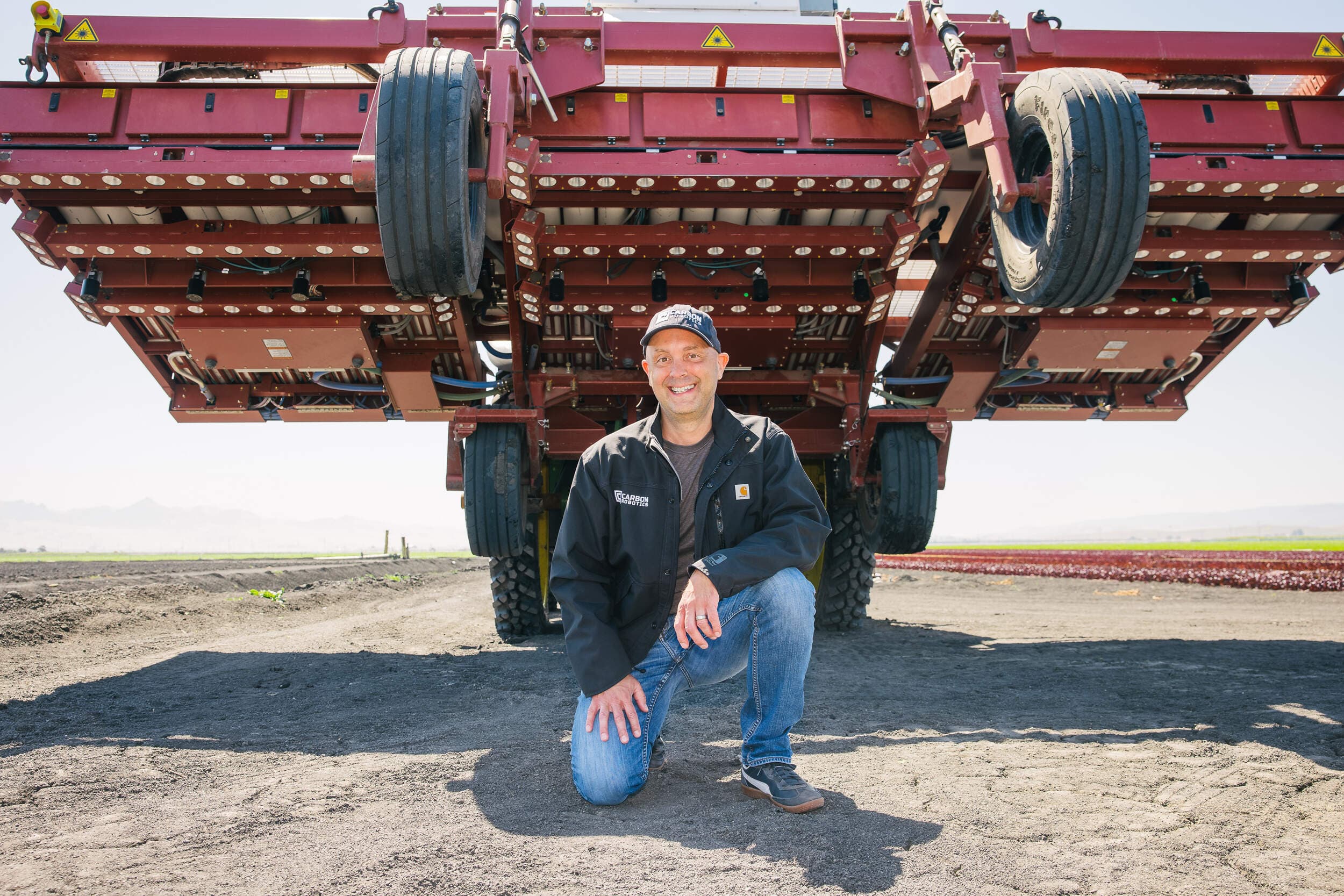
Branding photography contains headshots and keeps going. It adds the frames a headshot cannot carry — you mid-conversation with a client, your hands doing the thing you are known for, the room your customers walk into, the product you spent two years developing. A headshot fills the circle on a profile. A branding library fills a website.
In practice most Central Coast businesses need both, and the sensible order is usually headshot first if you are starting from nothing, then a fuller session once you know where you want to be seen. If a headshot is all you need right now, my guide to how to prepare for a headshot session covers wardrobe, grooming timing, and what to bring.
Branding Photography vs. Stock Photos
Stock imagery is cheap, instant, and a reasonable placeholder. It is also, on a page where someone is deciding whether to trust you, close to invisible. Usability research from the Nielsen Norman Group found a sharp split in how people treat images on a web page: pictures that carry information — real products, real people who actually work at the company — get looked at and scrutinized, while purely decorative images are ignored entirely. Jakob Nielsen's summary of the eyetracking work put it bluntly: users ignore stock photos of generic people.
There is a second cost that is easier to miss. A stock photo can appear on a competitor's site, on a page in a different industry, or in an advertisement you would rather not be associated with, because you licensed it and did not buy it. Your own images cannot. That exclusivity is a large part of what you are paying for.
What Goes Into a Brand Image Library
A complete branding library generally covers six kinds of image. Not every business needs all six, and the mix is something we decide together at the consultation based on where you are actually publishing.
- 1Headshots, delivered in more than one crop — a tight square for profile circles, a looser frame with room around you, and a horizontal version for website banners and press requests.
- 2Environmental portraits: you in the space where the work happens, with enough of the room in frame to give a stranger context.
- 3Process and detail images — hands, tools, materials, the half-finished version of the thing. These are the frames that make a business look real rather than staged.
- 4Product photography: clean, consistent images of what you sell, lit so that color and texture are accurate on a screen.
- 5Team and group photographs, including individual portraits shot in a matching style so a staff page looks cohesive even as people join and leave.
- 6Vertical and square crops built specifically for social platforms, so you are not cropping a wide photograph badly at nine at night.
Why Businesses Invest in Their Own Images
The honest argument is not that photographs are pretty. It is that people decide very quickly, and that images are what they decide on. A study published in Behaviour & Information Technologyfound that judgments of a web page's visual appeal were essentially formed within 50 milliseconds, and that ratings given at 50 milliseconds correlated closely with ratings given half a second later. The first impression is made before anyone has read your headline.
Stanford's Web Credibility Research, drawn from three years of studies with more than 4,500 participants, reached the guideline directly: design your site so it looks professional, or at least appropriate to its purpose, because people assess credibility from visual design and layout before they assess it from content. On a small business site, the images are most of that visual design.
The platform-level effects are measurable too. LinkedIn reports that members with a photo on their profile receive 21 times more profile views and 9 times more connection requests than members without one. And Google's own Business Profile guidance is specific about quality rather than quantity — photos should be in focus, well lit, and free of significant alterations or excessive filter and AI treatment. A blurry phone snapshot in your Google listing is not a neutral choice.
What a Branding Session Actually Involves
It starts with a complimentary consultation — phone, video, or in person at my Grover Beach studio. We talk about what your business does, who you are trying to reach, and every place these images need to live. That conversation becomes a shot list, which is the difference between a session that delivers what you needed and one that delivers forty nice pictures of the wrong thing.
From there you get a personalized styling guide so you are not guessing about wardrobe. If we are photographing on location, I scout your space in advance to plan lighting and compositions, and I will tell you what is worth clearing off a counter before we start. A focused headshot session takes thirty to forty-five minutes; a full branding or lifestyle session runs one to two hours depending on setups, outfit changes, and locations.
You do not need to know how to pose. That is my job, and I direct all of it — weight, hands, shoulders, chin, expression. Afterward I prioritize turnaround for branding clients, because a website launch or a campaign deadline does not move, and rush delivery is available when a project is genuinely time-sensitive. You can see how the full studio process works on the experience page.
Signs It Is Time to Book a Session
- Your website is going live, being redesigned, or currently running on images you found in a stock library.
- Your headshot is more than three years old, or it no longer looks like the person who walks into the meeting.
- You are posting to social media several times a week and re-using the same four photographs.
- You have been asked for a high-resolution image by a publication, a conference, or a partner, and you did not have one.
- Your team has changed enough that the staff page looks like it was assembled from different decades.
- You have launched a product and the only pictures of it were taken on a phone on a kitchen counter.
Who Owns the Photographs
This is the question most people forget to ask, and it matters more for business images than for family portraits. The U.S. Copyright Office states that, generally, the author and initial copyright owner of a photograph is the person who takes it, with a narrow exception for work made for hire. What you are able to do with any photographer's images therefore depends entirely on the license you are granted — not on having paid the invoice.
My branding and headshot images are delivered with a commercial use license, which means you can use them across your website, your profiles, print marketing, advertising, email, and press features for your business. Ask any photographer you are considering to put their usage terms in writing before you book. A brilliant photograph you are not licensed to run in an ad is not much use to you.
Where to Go Next
If this sounds like what your business needs, start with my headshots and branding photography page, which covers the services in detail and shows recent work. For sessions in specific towns, there are dedicated pages for San Luis Obispo and Pismo Beach. If your business is in growing, ranching, or winemaking, my agriculture photography work is the branding equivalent built for that industry, including magazine and editorial assignments.
And if you would rather know who is behind the camera first, my story covers the twenty-plus years and the art direction background that shape how I plan these sessions.
Sources
- Nielsen Norman Group — “Photos as Web Content,” Jakob Nielsen, October 31, 2010 (eyetracking finding that purely decorative images are ignored, while product photos and photos of real people are treated as content and scrutinized; users ignore stock photos of generic people)
- Lindgaard, Fernandes, Dudek & Brown — “Attention web designers: You have 50 milliseconds to make a good first impression!” Behaviour & Information Technology, 25(2), 115–126 (2006) (visual appeal judgments formed within 50 ms, closely correlated with judgments at 500 ms)
- Stanford Web Credibility Research — Stanford Guidelines for Web Credibility, Stanford Persuasive Technology Lab (Guideline 6: “Design your site so it looks professional (or is appropriate for your purpose)”; based on three years of research with more than 4,500 participants)
- LinkedIn — “Picture Perfect: Make a Great First Impression with Your LinkedIn Profile Photo” (members with a photo receive 21 times more profile views and 9 times more connection requests)
- Google Business Profile Help — Tips for business-specific photos on your Business Profile (“The photo should be in focus, well lit, and have no significant alterations or excessive use of filters or AI.”)
- U.S. Copyright Office — What Photographers Should Know about Copyright (“Generally, the author and initial copyright owner of a photograph is the person who ‘shoots’ or ‘takes’ the photo,” with an exception for works made for hire)