
Locations & Planning
The Best Time of Year for Outdoor Photos
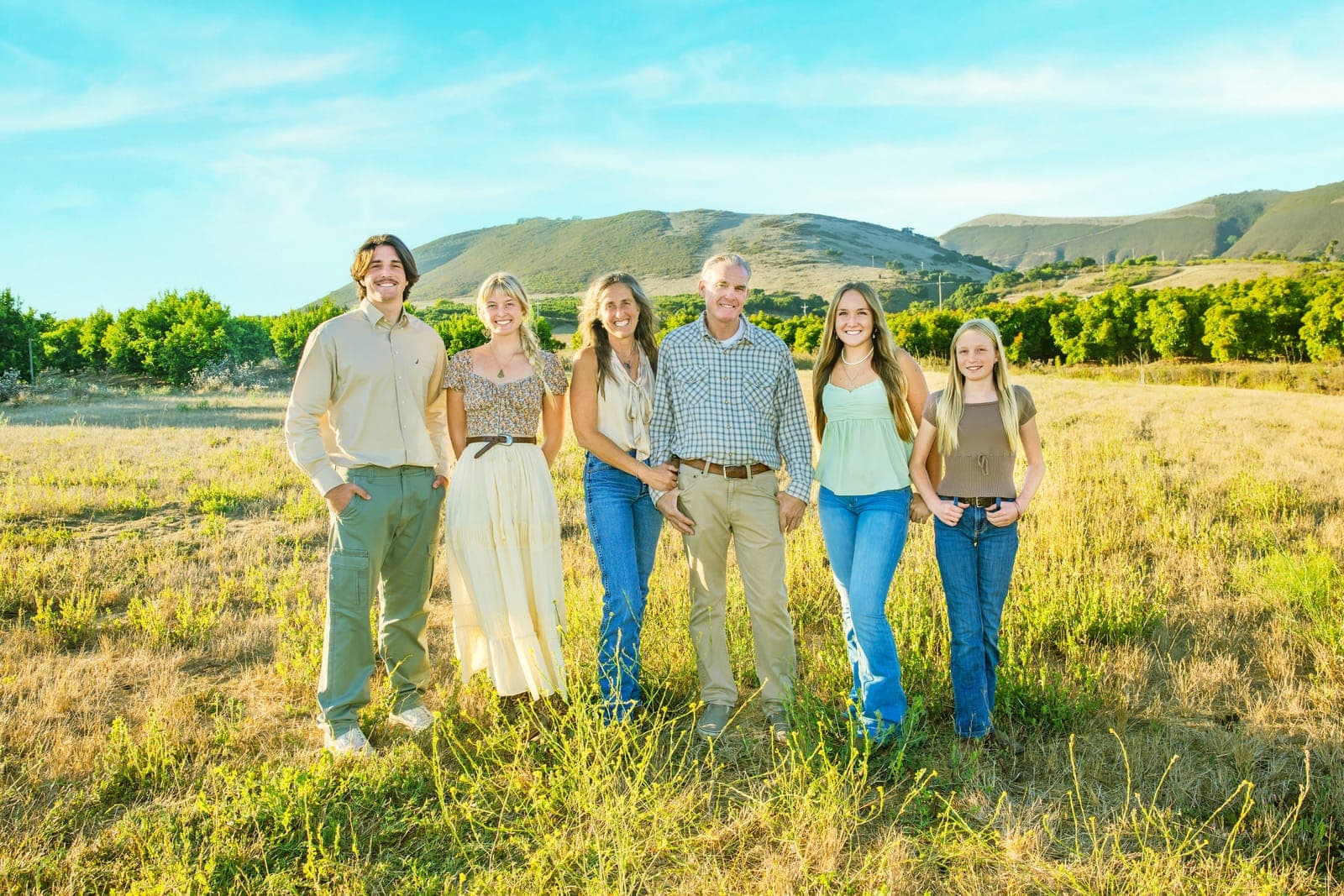
On California's Central Coast, the best time of year for outdoor photos is September and October. It is the warmest stretch of the year, the rain has not started, the wind has settled, and the marine layer that grays out late spring and early summer has pulled back. Spring is the runner-up for green hills and wildflowers, if you can live with more wind. Whatever the month, the hour matters more than the season: every outdoor session I photograph is planned around the golden hour, roughly one to two hours before sunset.
Why Early Fall Wins Here
Ask this question anywhere else in the country and the answer is fall because of the leaves. Here the answer is still fall, but for a completely different reason: it is when the coast finally gets the summer weather everyone assumes it has in June.
The long-term record from the San Luis Obispo Polytech weather station on the Cal Poly campus, with records going back to 1893, shows it plainly. September has the highest average high of any month at 77.0°F, edging out August, and October is still at 75.3°F. Weather Spark's analysis for Pismo Beach lands in the same place, naming September the hottest month on the shoreline at an average high of 76°F.
The rain is not a factor yet either. The same station averages 0.25 inches in September and 0.92 inches in October, against an annual total of 22.40 inches — about 85 percent of which arrives between November and March. The wind has settled too: Weather Spark puts the calmer part of the year at Pismo Beach between late June and late November, which matters more than people expect when half your family has long hair and you are standing on a beach.
And the marine layer, the low gray cloud that sits over the coast on so many late-spring and summer mornings, is mostly behind you. The National Weather Service describes April to August as the most likely time of year for marine layer clouds to form. By September, the hills have gone gold, the light is lower and warmer in the evening, and the beaches have emptied out after summer. It is also the busiest stretch on my calendar, so it books first.
The Year Month by Month
Here is what each month actually brings, with long-term averages from the San Luis Obispo Polytech station and what that means in front of the camera.
| Month | Avg. high | Avg. rain | On camera |
|---|---|---|---|
| January | 62.3°F | 4.96 in. | Wettest month. Green hills, crisp light between storms, monarchs in the grove. |
| February | 63.5°F | 4.61 in. | Still green and wet. Monarch season winds down by mid-month. |
| March | 64.8°F | 3.37 in. | Hills at their greenest; wildflowers begin. Breezy. |
| April | 66.6°F | 1.53 in. | Wildflowers. Marine layer season starts. Windy at the beach. |
| May | 69.0°F | 0.43 in. | Windiest month on the coast. Gray mornings, hills start turning gold. |
| June | 72.7°F | 0.12 in. | Longest evenings of the year; foggy mornings at the shoreline. |
| July | 76.0°F | 0.02 in. | Driest month. Golden hills, long evenings, busy beaches. |
| August | 76.8°F | 0.04 in. | Calmest wind of the year. Marine layer season ending. |
| September | 77.0°F | 0.25 in. | Warmest month. The best all-around month for outdoor sessions. |
| October | 75.3°F | 0.92 in. | Warm, dry, low golden light. Last reliable month before the rain. |
| November | 69.6°F | 2.14 in. | Rain returns, monarchs arrive, sunset comes early. |
| December | 63.5°F | 4.01 in. | Shortest days. Soft light and quiet beaches when it is dry. |
Temperature and rainfall are period-of-record averages for the San Luis Obispo Polytech station (1893–2016) from the Western Regional Climate Center. The station sits inland on the Cal Poly campus; the beaches sit closer to the marine layer and are usually cooler and grayer on summer mornings.
Spring: Green Hills, Wildflowers, and Wind
If you want the Central Coast to look green, spring is the only time it does. Visit SLO CAL, the county's tourism board, puts it simply: winter rains give way to pastel fields and green hills that are most vivid from March to May. Some years that becomes a true superbloom and some years it does not, because the display depends on how much rain fell over the winter.
The trade-off is wind. Weather Spark's analysis puts May as the windiest month at Pismo Beach, with an average hourly wind speed of 9.6 miles per hour, and the breezier half of the year running from late November into late June. On the sand, that means hair across faces and dresses doing things nobody planned. The marine layer season also begins in April, so a spring beach session can be gray well into the afternoon.
The fix is to go where spring actually shows off. Inland locations in the hills around San Luis Obispo and Arroyo Grande are greener, more sheltered and usually clear earlier in the day than the shoreline. My guide to the best photo locations in San Luis Obispo covers the open spaces and trailheads I use in spring.
Summer: Long Evenings and the Marine Layer
Summer is when most families want to book, and it is the season most likely to surprise you. The locals' names for it, “May Gray” and “June Gloom,” exist for a reason. The National Weather Service explains that marine layer clouds form over the cool ocean, are carried onshore by the wind, and usually reach their maximum extent around sunrise, when the air near the surface is coolest.
Here is the good news hiding in that description. The layer typically burns back as the day warms and, as AOPA's coverage of coastal weather notes, reforms after sunset when surface temperatures drop again. That leaves the hour before sunset — the exact hour I want anyway — as often the clearest part of a summer day. It is also why Weather Spark can list May through October as the clearer part of the year at Pismo Beach while summer mornings are gray: averaged over a full day, the fog does not last long.
The other thing summer brings is late light. Sunset at Pismo Beach reaches about 8:18 p.m. in mid-June, which puts a golden-hour start near 6:45 p.m. That is perfect for teenagers and hard on toddlers whose bedtime is seven. If you have little ones, early fall gives you the same warm light an hour or two earlier in the evening.
Winter: Underrated, With Short Days
Winter is when the rain happens — January is the wettest month at the San Luis Obispo station, averaging 4.96 inches — but it does not rain every day, and a dry winter afternoon here is lovely. The light is soft all day, the beaches are nearly empty, the surf is bigger, and the hills start turning green again after the first storms.
Winter also has a backdrop no other season has. California State Parks lists the Pismo State Beach Monarch Butterfly Grove season as November through mid-February, when western monarchs overwinter there. The grove is state park land, which means a permit for professional photography; I handle that as part of planning.
The catch is daylight. By mid-December, sunset at Pismo Beach falls at about 4:52 p.m., so golden hour starts around 3:20 in the afternoon. Winter sessions need a flexible date and a backup, and the studio in Grover Beach is the backup when the sky will not cooperate.
The Hour Matters More Than the Month
A perfect September day photographed at one in the afternoon will usually lose to a foggy June evening. Overhead sun puts dark shadows under eyes, noses and chins, makes everyone squint, and blows out white shirts and pale skin. The golden hour, roughly one to two hours before sunset, does the opposite: the light is low, warm and coming from the side, so it lights faces evenly and wraps around people instead of carving them up.
That hour moves a lot across the year. A session that starts about ninety minutes before sunset begins near 5:40 p.m. in mid-September, about 5:00 p.m. in mid-October, and about 3:20 p.m. in mid-December. The full month-by-month sunset table for Pismo Beach, from the U.S. Naval Observatory, is in my guide to when to book senior photos, which also covers yearbook deadlines if you are planning for a graduating senior.
Plan Around What the Photos Are For
The best month on paper is not always the best month for you. Work backward from where the photographs are going.
Holiday cards. Your reveal and design appointment falls about two to three weeks after the session, and finished products arrive within about three to four weeks of that appointment. Allow roughly six to eight weeks from session to cards in hand, which means photographing by mid-October for cards you can mail in early December. Conveniently, that is the best weather of the year.
Wall art for a specific room.Think about what the room needs. Golden September hills read warm and calm above a neutral sofa; green spring hillsides feel fresh in a bright kitchen or a child's room. That choice is worth making before the session, not after, and my guide to canvas prints vs. framed photos covers choosing the surface once you know the wall.
Wardrobe. Season changes what looks natural. Linen and light layers belong in September; knits and heavier textures suit a winter beach. My guide to what to wear for family photos covers building a palette that works in Central Coast light.
If the Weather Does Not Cooperate
Coastal weather changes by the hour and by the mile, so I watch the forecast closely before every session. If rain or truly unworkable conditions are coming, I reach out in advance so we can reschedule at no charge or move the session into my studio in Grover Beach.
Fog alone is rarely a reason to cancel. A thin marine layer is some of the softest, most flattering light you can stand in; it simply takes the ocean horizon out of the background. If the view matters, inland locations are often clear when the beach is not, and a sheltered cove or bluff-top park handles wind far better than open sand. My guide to the best photo locations in Pismo Beach notes which spots hold up in which conditions.
Where to Go Next
If early fall sounds right, now is the time to reach out. My family photography page covers what a session includes and where we can photograph across the Central Coast, and the experience page walks through everything from the first consultation to the finished artwork on your wall.
Sources
- Western Regional Climate Center — San Luis Obispo Polytech, California (047851), Period of Record Monthly Climate Summary (period of record 02/01/1893 to 06/10/2016; average maximum temperature by month from 62.3°F in January to 77.0°F in September and 75.3°F in October; average total precipitation by month from 4.96 inches in January to 0.02 inches in July; annual average 22.40 inches)
- Weather Spark — Climate and Average Weather Year Round in Pismo Beach (based on NASA MERRA-2 reanalysis, 1980–2016: windier part of the year November 20 to June 26 with May the windiest month at 9.6 mph average hourly wind speed; calmer part June 26 to November 20 with August the calmest at 7.3 mph; September the hottest month with an average high of 76°F; clearer part of the year May 7 to October 31)
- National Weather Service — What are Marine Layer Clouds and How Do They Form? (“The most likely time of the year for marine layer clouds to form is April to August”; clouds “often reach their maximum extent around sunrise”; advected over coastal land areas by the winds; evaporate as sunlight warms the surface through the day)
- AOPA — The Coastal Marine Layer (Dave Hirschman, 2025) (“The marine layer can burn off during the day when sunshine cuts through the clouds and warms the land beneath”; “The clouds reform after sunset when surface temperatures drop again”)
- Visit SLO CAL — Where to Find Wildflowers in SLO CAL This Spring (“Winter rains give way to stunning pastel fields and green hillscapes most vivid from March to May”; a superbloom is “not guaranteed every spring”)
- California State Parks — Pismo State Beach Monarch Butterfly Grove (“Monarch butterfly season runs from November through mid-February”; free to visit and open daily from sunrise to sunset)
- U.S. Naval Observatory — Sun and Moon Data for One Day (sunset times for Pismo Beach on the fifteenth of the month: about 8:18 p.m. in June, 7:10 p.m. in September, 6:28 p.m. in October, and 4:52 p.m. in December; session start times above are those sunsets minus ninety minutes)