
Senior Portraits
School Photos vs. Professional Senior Portraits
Parents usually bring me this question as a budget question — we already paid for the school pictures, so do we need this too? It is a fair thing to ask and the wrong frame for the decision. These are not two versions of the same photograph at two prices. They are two different products, made in two different ways, for two different purposes, and only one of them has a deadline attached to it. Here is what each one actually is, and how they fit together.
The Short Answer
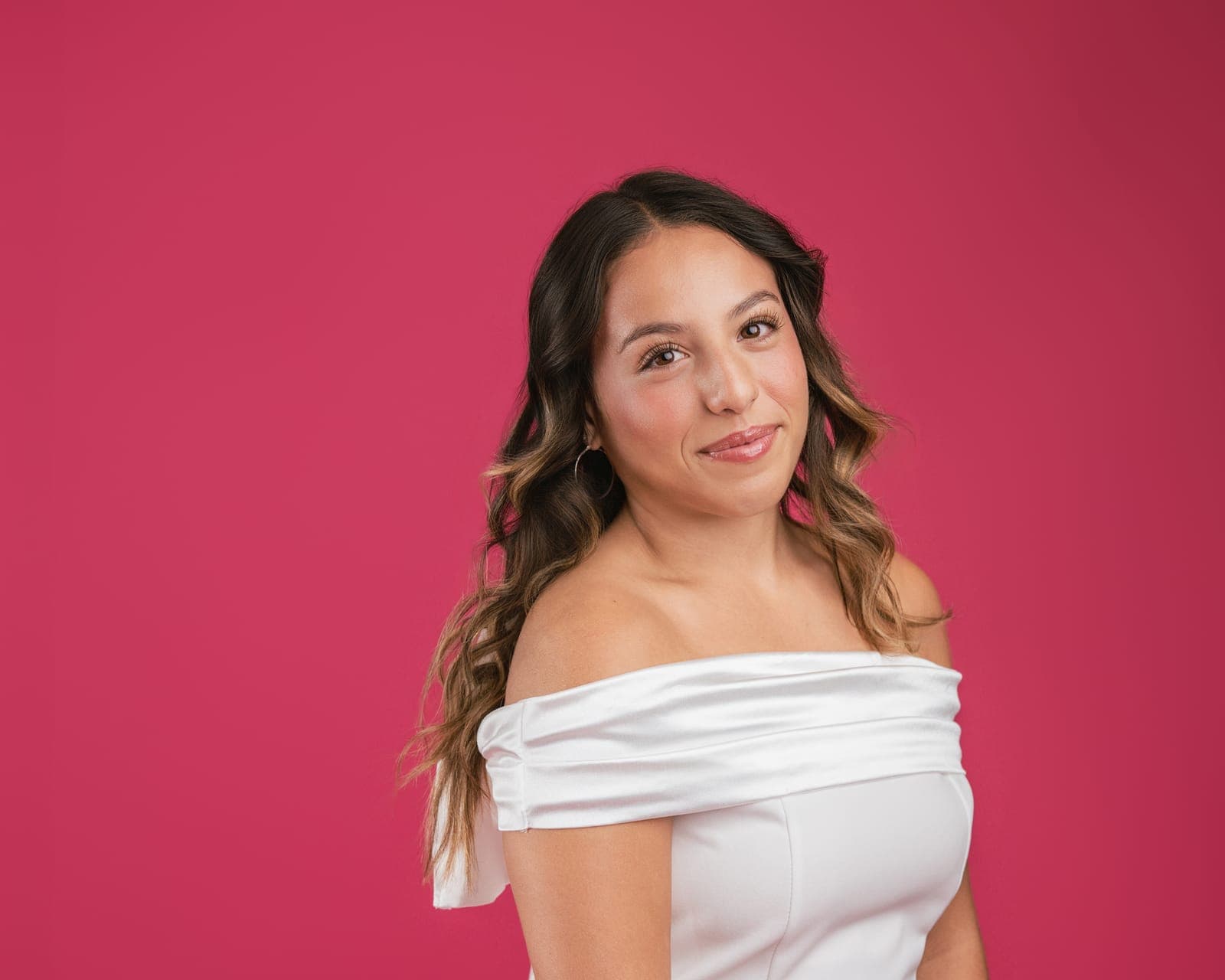
The school photo exists to put a consistent, correctly sized face in a grid and on an ID card. It is volume photography and it is very good at that job. A senior session exists to make photographs of one specific eighteen-year-old in the last year they live at home, in the places and clothes they would choose, finished as artwork. Those are not competing purchases. They answer different questions.
What trips families up is the overlap: at most schools the yearbook will accept a professional portrait in place of the school photo, but only if it meets the school’s specifications and arrives by the school’s date. That one rule is where nearly all the confusion, and nearly all the missed deadlines, come from.
Side by Side
| Factor | School photo | Senior session |
|---|---|---|
| What it is for | The yearbook grid, the student ID, the school's file | Your wall, graduation announcements, the album |
| How it is made | A fixed day, a line of students, a couple of minutes each | Planned around one senior, an hour and a half to two hours |
| Who chooses the look | Nobody — the setup is the same for everyone | The senior, from location to wardrobe to mood |
| Outfits | Whatever you wore to school that day | Three or four, planned in advance |
| Background | A standard backdrop in a gym or multipurpose room | The studio, the coast, campus, a field, your own street |
| The frame | Head and shoulders, vertical, one pose | Close frames, wide frames, and everything between |
| What you get back | Prints in standard sizes, an ID photo, maybe a download | Finished artwork designed with you at a reveal appointment |
| Who sets the date | The school | You, which is why it is the part you can plan |
What the School Photo Is Actually For
Picture day is a logistics exercise before it is a photography one. A crew arrives, sets up one lighting configuration and one backdrop in a gym or a multipurpose room, and photographs several hundred students between the first bell and lunch. Every frame has to match every other frame, because the output is a page of faces in identical boxes. Consistency is the deliverable.
That is not a criticism, and I want to be clear about it, because photographers are sometimes snide about school photography in a way that is both unfair and self-serving. Nobody could do what I do three hundred times in a morning, and nothing I make would work as an ID photo. The constraints produce the result the school needs: a face, lit the same way as the face next to it, at a size that reproduces cleanly when it is printed an inch tall.
It is also inexpensive by design. Consumer Reports puts school packages at “a low of about $15 to upwards of $100,” and cites a Lifetouch survey finding that 96 percent of parents want official school photos. Almost every family buys one, and almost every family should.
The Yearbook Rule Families Learn Too Late
Here is the part that costs people their favorite photograph. Senior year is usually the one year a student may submit an outside portrait for the yearbook instead of the school photo — and that submission is governed by a date, a format, and a crop that none of us get to negotiate.
Take the school closest to my studio. Arroyo Grande High Schooltells the Class of 2027 that “the deadline to submit your senior photo is Monday, December 1st, 2026,” that “all senior portraits must be submitted directly through the Jostens website,” and that “if no portrait is submitted by that date, your Lifetouch school ID photo will be used in its place.” The photo must show head and shoulders only; full-body shots are not accepted and the yearbook team may re-crop anything that does not meet the standard. Images must be high resolution, so screenshots and files pulled off social media are rejected. Color and black and white are both allowed. And the school is explicit that it “does not recommend or endorse any specific photographers” — the choice is entirely yours, which also means the responsibility for meeting the specs is yours.
The framing rules are consistent across publishers because they come from the shape of the page. Walsworth, one of the major yearbook companies, tells students to be photographed “from the chest up” with no hands in the picture, to face the camera straight on and sit up straight, and to stand in front of a “blank, one-color wall.” It rules out hats, sunglasses, props, writing on the shirt, and additional people or pets.
Read that list and you can see why the picture you love most from a session is often the one the yearbook cannot use. It is wide, it has a location in it, and there is a dog in the corner. The fix is not to shoot a smaller session — it is to shoot one deliberately plain look while we are already working, so the yearbook gets what it requires and you keep everything else. Dates differ school by school, so find your own before you plan anything; my guide to when to book senior photos works the whole calendar backward from that deadline.
What a Senior Session Is Actually For
A senior session starts with a consultation rather than a camera. We talk about what they are into, where they spend their time, what they want to look like, and what their family wants to end up with on the wall. Then the session itself typically runs one and a half to two hours, with several outfit changes and often more than one location. About two to three weeks later we sit down together at the studio, see the images large for the first time, and design the artwork, announcements, and album from what we actually have rather than from a package chosen in advance.
The output is the difference. Picture day gives you one pose in standard print sizes. A session gives you a yearbook-safe frame, images for graduation announcements, something for each set of grandparents, and one piece large enough to live in a hallway. If you want the fuller version of what that process looks like end to end, it is laid out on the experience page, and editorial senior pictures covers how a concept-driven session gets planned.

What the School Photo Does Better
- It is the official record. The ID card, the office file, and the yearbook fallback all come from it.
- It is cheap, and it is supposed to be — Consumer Reports puts packages at a low of about $15 to upwards of $100.
- It requires nothing of you. The date arrives, the student stands on the mark, and it is done.
- It is consistent across the whole class, which is the entire point of a page with two hundred faces on it.
- Nearly every family buys one. Consumer Reports cites a Lifetouch survey finding that 96 percent of parents want the official school photo.
- It is the safety net. If a submitted portrait misses the deadline or fails the specs, this is what runs in its place.
The honest cost: it is not about your senior. It cannot be, because the same setup has to serve the whole class. The pose is assigned, the clothes are whatever got worn that morning, and the photographer has about ninety seconds to get an expression out of a seventeen-year-old who has been standing in a line. Nobody frames one on the wall, and nobody was ever supposed to.
What a Senior Session Does Better
- It is about one person. Every decision in it — the location, the light, the clothes, the time of day — is made for your senior and nobody else.
- It produces a range rather than a frame: a yearbook-safe look, announcement images, something for the grandparents, and one for the wall.
- It can hold the things that matter to them. The sport, the instrument, the truck, the dog, the thing they have done every day for four years.
- It is photographed where they actually are. Campus, the dunes, a downtown block, the family ranch — context the backdrop cannot provide.
- It is retouched and finished individually rather than batch-corrected, and you see the images together before anything is ordered.
- It is the last portrait of them at home. That is a different object from a wallet print, and families treat it that way twenty years later.
The honest cost: it takes planning and it costs real money. It needs a date months ahead of the deadline, a conversation about wardrobe, and a senior who is willing to be photographed for two hours. If none of that is available this year, the school photo is a perfectly respectable answer and I would rather tell you so than sell you a rushed session.
The Question Almost Nobody Asks: Who Holds the Rights?
Paying for photographs and owning them are different things, and that is true of both options here. The U.S. Copyright Office states that “the author and initial copyright owner of a photograph is the person who ‘shoots’ or ‘takes’ the photo,” with an exception for work made for hire, which arises “when a photographer creates works as part of their scope of employment” or “when there is an express agreement between a photographer and commissioning party” — in which case “the employer or commissioning party is considered the author and owns the copyright to the images.”
Consumer Reports puts the practical version plainly for school pictures: families should not scan prints and email them to relatives, because “they don’t own the copyright” — buying the digital download is what grants that permission. It is a small thing until the week you want to post a photograph or send it to a grandparent.
Ask the same question of any senior photographer before you book, including me. At my studio, each portrait pose you select for purchase as artwork or prints comes with a companion phone-size digital image, so the pictures you buy are yours to share. What you can do with your images should be written down somewhere before the session, not discovered afterward — the same principle covered in my guide to choosing a photographer.
How I Would Plan the Year
Assuming you want both — which is what I would do, and what nearly every family here ends up doing:
- 1Find your school's yearbook deadline first, before anything else. At Arroyo Grande High School the Class of 2027 date is Monday, December 1, 2026, submitted through the Jostens website. Yours may be earlier.
- 2Work backward from that date by about eight weeks — session, editing, your choices, and the submission itself all have to fit inside it.
- 3Book the session for the season you want in the pictures, not the week before the deadline. Summer and early fall are the Central Coast's kindest light and the busiest part of my calendar.
- 4Take the school picture anyway when picture day comes. It costs very little, it is the ID photo, and it is your fallback.
- 5Shoot one deliberately simple, yearbook-safe look during the session: a plain top, a clean background, chest up, no props. Ten minutes of the session covers it.
- 6Submit that frame the way your school asks — their link, their format, high resolution, by their date — and do not assume an emailed file counts.
- 7Then choose the artwork separately, with the deadline already behind you and nothing rushing the decision.
So Is It Worth It?
That depends on what you want to be holding in ten years, which is the only version of the value question I find useful. A school photo is a record that your student was in the eleventh row of the Class of 2027. A senior session is a set of photographs of a particular person at the precise moment before everything changes — made in the places they drive past every day, in the clothes they picked, with the dog or the truck or the cleats that defined four years of their life.
The numbers behind that decision — published national session and package pricing, what the fee does and does not include, and what changes on the California coast — are in my guide to how much senior portraits cost. When you are ready to plan the session itself, the senior portraits page is the place to start, and what to bring to a senior photo shoot covers the packing list once the date is on the calendar.
Sources
- Arroyo Grande High School — Yearbook / Senior Portrait Submission (“The deadline to submit your senior photo is Monday, December 1st, 2026”; “All senior portraits must be submitted directly through the Jostens website”; “If no portrait is submitted by that date, your Lifetouch school ID photo will be used in its place”; “The high school does not recommend or endorse any specific photographers”; head and shoulders only, full-body shots not accepted, high-resolution files required, screenshots rejected, color or black and white accepted, and the yearbook team may re-crop or adjust exposure for consistency)
- Walsworth Yearbooks — Portrait Help (photograph “from the chest up” with no hands in the picture; face the camera straight on and sit up straight; stand in front of a “blank, one-color wall”; no hats, sunglasses, props, writing on the shirt, or additional people or pets)
- Consumer Reports — How to Avoid Overspending on School Photos (“Packages can cost anywhere from a low of about $15 to upwards of $100”; a Lifetouch survey finding that “96 percent of parents want official school photos”; families should not scan and email school prints because “they don’t own the copyright,” while buying the digital download is what grants permission to share)
- U.S. Copyright Office — What Photographers Should Know about Copyright (“the author and initial copyright owner of a photograph is the person who ‘shoots’ or ‘takes’ the photo”; work made for hire occurs “when a photographer creates works as part of their scope of employment” or “when there is an express agreement between a photographer and commissioning party,” in which case “the employer or commissioning party is considered the author and owns the copyright to the images”)
School deadlines and submission rules change every year and differ between schools. The Arroyo Grande High School details above were published for the Class of 2027 and are quoted as an example — always confirm the current requirements with your own school’s yearbook page or adviser.