
Team Headshots for Small Businesses
Open your company's team page and look at it the way a stranger does. If one portrait was taken in a conference room under the overhead lights, the next is cropped out of a wedding photograph, and a third is a phone selfie taken in a parked car, the page is saying something you never meant it to say — that these people do not quite belong to the same business. A matched set of headshots fixes that, and for most small teams it takes one visit.
I am Amy Marlan. With 20+ years of professional photography experience and a background as an art director, I photograph team headshots for small businesses across the Central Coast — at your office, clinic, shop, tasting room, winery, farm, or ranch, or in my Grover Beach studio. Everyone is lit the same way, photographed against the same background, and cropped to the same framing, so the finished set reads as one company instead of a dozen separate decisions.
Plan Your Team Session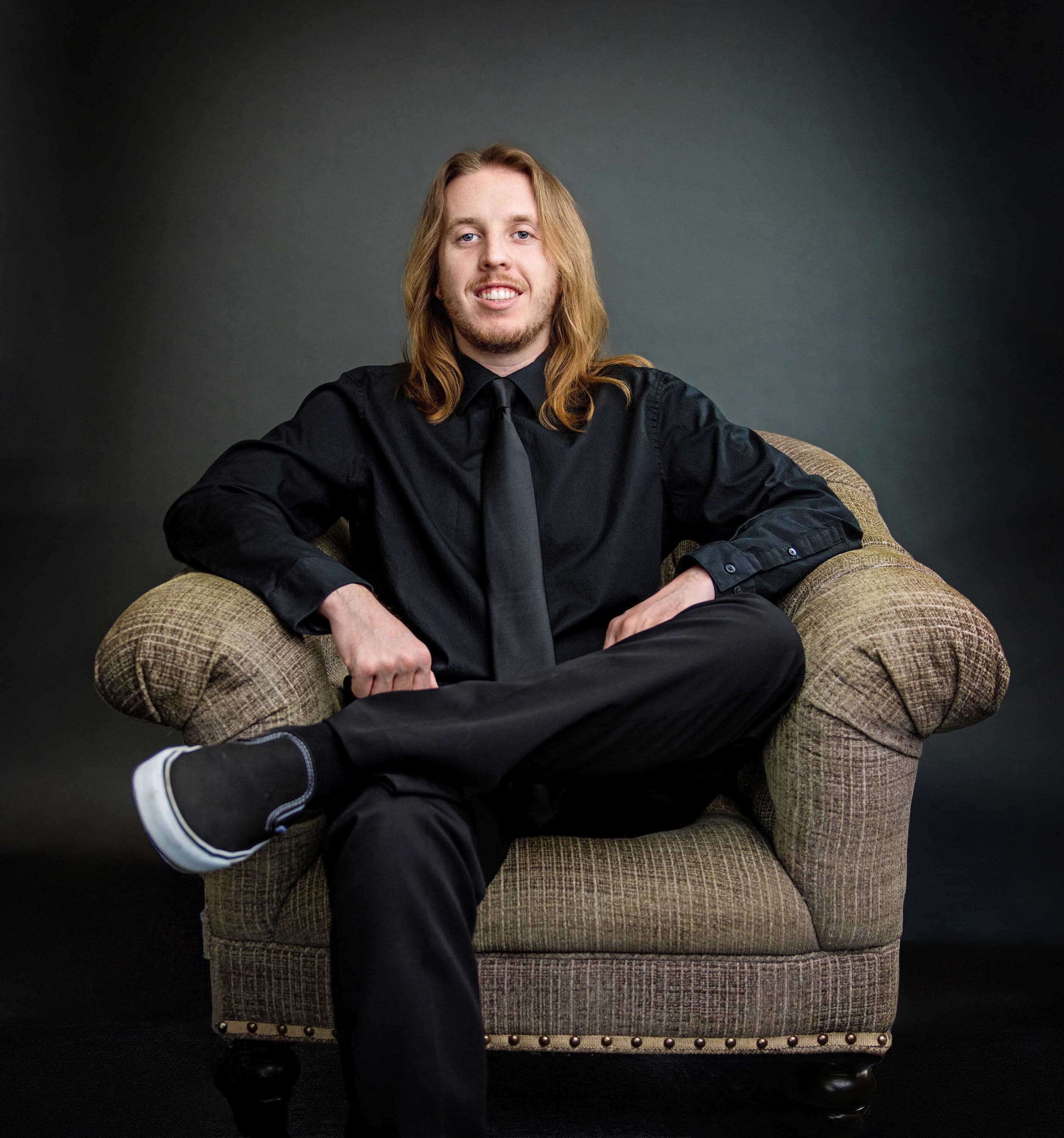
What a Matched Set Actually Means
“Team headshots” is not a style. It is a set of individual portraits in which three things are deliberately held constant, so that no one person stands out for the wrong reason.
The Same Light
Headshots lit by whatever happened to be in the room — a window on a gray day for one person, overhead fluorescents for the next — will never sit next to each other comfortably. For a team session I bring the light with me and it does not change between the first person and the last. That single decision does more for a cohesive team page than anything else on this list.
The Same Background
Same wall, same distance from it, same amount of softness behind each person. When the background tone shifts from one headshot to the next, the eye reads it instantly even when it cannot name what is wrong. Holding the background constant is also what makes the set survive being laid out in a grid on your website.
The Same Crop
Heads the same size in the frame, eyes on roughly the same line, the same amount of space above and below. Without a consistent crop a team page looks like a collage of found photographs no matter how good each individual picture is. I set the framing once and hold it for everybody.
There is a fourth variable that matters just as much and cannot be set up in advance: the people. Most of your team has not been photographed properly since a driver's license renewal, and they will arrive expecting it to be uncomfortable. Directing them — telling each person exactly where to stand, what to do with their hands, and how to hold an expression that looks like them — is the real work of a team session, and it is the difference between a set of matched photographs and a set of matched photographs your team is actually willing to use.
Two Ways to Photograph Your Team
At your workplace
I set up a portable studio in a conference room, a break room, or any space with a clear wall, and your team comes through in the order we planned. Nobody loses a morning to driving, and the people who can only step away for a few minutes get those few minutes. The honest constraint is space: I need enough depth to place the camera back from the subject and room for the lights, so a conference room or an open corner works and a narrow hallway does not. Being on site also means we can add environmental portraits — your team actually doing the work — in the same visit.
In the Grover Beach studio
The studio gives complete control of the light and background, nothing has to be built on arrival, and the same setup is available again later — which matters more than people expect once you start hiring. The trade-off is travel: everyone has to come to Grover Beach, and for a team spread across several job sites that can cost more time than it saves. Small teams and businesses without a photogenic room of their own usually come to me.
How a Team Headshot Session Runs
- 1
A short planning conversation
How many people, where they will be on the day, whether anyone works remotely, and what the images actually need to do — a website team page, LinkedIn profiles, a proposal deck, a press kit, or all of it. What the images are for changes the crop I shoot for and the files I deliver.
- 2
One email to your team
I give you the wardrobe guidance and a suggested running order to forward on. A team that has read one short note beforehand photographs faster and looks better than a team that finds out about the session when the photographer walks in.
- 3
Setup before anyone arrives
The lighting and background are built and tested before the first person sits down. That is the part that takes time, and doing it once is the whole reason a team session is efficient — the time cost per person is just the few minutes they are actually in front of the camera.
- 4
People come through in sequence
Each person is directed, not left to work it out alone. Where to put their weight, what to do with their hands, which shoulder forward, and how to produce an expression that looks like them rather than a held smile. This is the part most people dread, and it is the part I am there to carry.
- 5
A group frame, if you want one
Many teams add a full group photograph while everyone is already dressed and in one place. It is far easier to do on the same day than to try to assemble again later.
- 6
Editing to a single standard
Every selected image is edited to match the rest of the set, so skin tones and color stay consistent down the page rather than drifting person to person. Standard turnaround is two to three weeks, and rush delivery is available when a site launch or a deadline depends on it.
What to Tell Your Team Before the Day
Keep the brief short or it will not be read. Solid colors, clothing that fits well, minimal busy patterns, and no large logos unless they are part of how your brand presents itself. Ask the team to work inside a shared range rather than matching exactly — dark neutrals, or business casual in muted tones — so the finished grid holds together without looking like a uniform. For everything else, send them my guide to how to prepare for a headshot session, which covers haircut timing, the day before, the morning of, and what to bring.
It also helps to tell people where the picture is going, because that is what makes them take the note seriously. For most teams the first destination is LinkedIn, whose own guidance is that your face should occupy at least 60% of the frame, cropped from the top of the shoulders to just above the head — far tighter than the group photo most people are currently using. LinkedIn also states that a profile with a photo is fourteen times more likely to be viewed than one without. On the technical side, LinkedIn requires a PNG or JPG between 400 x 400 and 7680 x 4320 pixels, under 8 MB. The square crop you receive is built to satisfy that without anyone having to re-crop it in a hurry.
One more thing worth saying out loud to the team: nobody is expected to know how to pose. That is my job on the day.
Plan for the People You Have Not Hired Yet
Every matched team page starts to come apart the moment someone joins. Six months after a session, the new hire's portrait is the one taken on a phone against a beige wall, and the set you paid for now has an obvious seam in it. This is the single most common thing small businesses fail to plan for, and it is easy to avoid if you decide up front.
The deciding factor is how reproducible the setup is. A session photographed in the studio, or against a controlled background I brought with me, can be recreated later for one person so their headshot drops into the existing grid without announcing itself. A session built around one specific wall in your lobby at one specific hour of the afternoon is much harder to match a year on, when the light is different and the wall has been repainted.
So tell me during the consultation if you expect to be hiring. If matching later portraits matters to you, we will plan the setup around that from the start rather than discovering the problem when your first new hire asks where to send their photo.
What Your Business Receives
Each person's portrait is delivered in the formats your business actually uses, with a commercial use license that covers your website, marketing, advertising, and recruiting.
Web-Optimized Files
Sized and compressed for your team page and email signatures, so the grid loads quickly instead of dragging your site down with a dozen full-resolution portraits.
High-Resolution Files
Full-resolution versions for print — proposals, trade show banners, conference programs, and press requests that need a file larger than the web copy.
Square and Horizontal Crops
The same portrait cropped for the places it has to live: a square crop for profile photos and a wider crop for website headers and directory listings.
If you are still working out what your business needs, start with what branding photography actually includes — a team headshot set is often the first piece of a larger image library rather than the whole of it. The full headshots and branding photography page covers individual sessions, lifestyle work, and product photography, and I have dedicated pages for businesses in San Luis Obispo, Pismo Beach, and Santa Maria. Growers, ranchers, and wineries who want crew portraits alongside images of the crop and equipment should look at agriculture photography.
Team Headshot Questions
Ready to Photograph Your Team?
Tell me how many people you have, where they work, and what the images need to do. I will put together a plan that fits inside your workday.
Plan Your Team Session