
Pet Photography
What to Expect at a Pet Photo Session
A professional pet photo session lasts about an hour, runs at your pet's pace, and happens in three parts: a consultation where we plan around your pet's personality, the session itself with plenty of breaks for treats, water, and play, and a reveal two to three weeks later where you choose your portraits. Nobody is expected to hold a pose on command — least of all your dog. Here is how each part works, and what you can do to make it easy.
A Pet Session, Start to Finish
Every part of this is expanded on below, but this is the whole process in order.
- 1A consultation about your pet — their personality, their quirks, their favorite treats, how they handle new places, and where the finished portraits will hang.
- 2Choosing the setting — the Grover Beach studio for a clean, timeless look or a pet who is overwhelmed outdoors, or the beach, golden fields, or a trail for a pet who loves being out.
- 3A little preparation at home — grooming timed a few days ahead, the right treats cut small, and, for cats, getting comfortable with the carrier.
- 4Arrival and settling in — the first minutes are for sniffing and exploring, not for photographs.
- 5The session — about an hour, worked in short bursts with treats, toys, and sound, with you in some of the frames if you like.
- 6Breaks and an honest read of your pet — water, treats, and play between bursts, and a no-cost reschedule if it is simply not their day.
- 7The reveal — about two to three weeks later, you see your images on a large screen in the studio and design your wall art and albums.
Before the Session: The Consultation
A pet session is planned around one participant who cannot tell me anything, so you do the talking for them. We start with a conversation about your pet — their personality, their quirks, the treats they love, and how they feel about new places. We also talk about the look you want and where the finished artwork is going to live, because a portrait for above the fireplace is planned differently from a set of pages for an album.
Tell me the things that feel too minor to mention. A dog who is wonderful with people but uneasy around other dogs. A cat who hides at the sound of a doorbell. Stiff hips, a recent surgery, a puppy who has not finished vaccinations, a senior dog who tires quickly. Knowing them in advance shapes which location I suggest, what time of day we book, and how long each burst of shooting runs.
If you have more than one pet, bring them all — the session covers your household. If they do not get along in the same space, I photograph them separately during the same session.
Studio or Location?
I photograph pets in my Grover Beach studio and on location across the Central Coast, and the right choice is usually decided by your pet rather than by the look you have in mind.
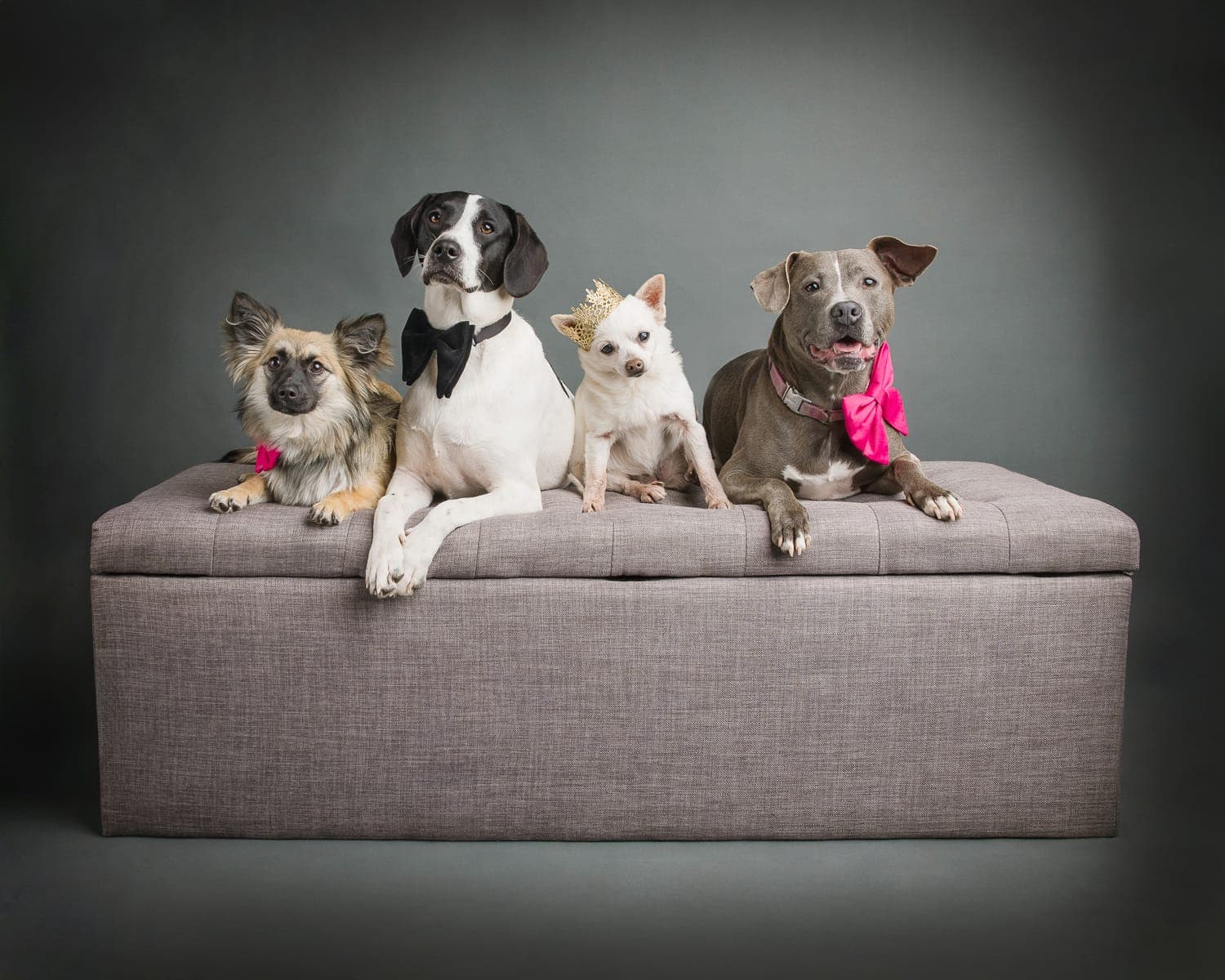
The studio suits pets who get overwhelmed by outdoor distractions, and it suits most cats. It is also the setting for a clean, timeless portrait against a simple backdrop, like the one at the top of this page. Studio lighting sounds intimidating for an animal, but it is shaped, bounced, and introduced gradually so your pet is comfortable with it before we begin.
Outdoorssuits the dog who comes alive on the sand, in golden grass, or on a trail. It comes with a few rules worth knowing. At Pismo State Beach, dogs are allowed on the beach and park trails but must stay on a leash no longer than six feet at all times, and they are not allowed in the Pismo Dune Preserve. The City of Pismo Beach sets the same six-foot leash limit outside designated parks. A dog who is nervous around waves does not need to go near them — the dry sand and the bluff-top parks make beautiful backgrounds with the ocean safely behind them.
Heat matters more than people expect. The American Kennel Club notes that short-snouted dogs, dogs with thick or double coats, dark-coated dogs, and overweight or elderly dogs are all more sensitive to heat, so on warm days we plan around shade, water, and the cooler end of the day. For specific spots, my guides to the best photo locations in Pismo Beach and the best photo locations in San Luis Obispo both note which ones welcome dogs.
How to Prepare Your Pet
Grooming. If your dog is due for a bath or a professional groom, book it a few days ahead rather than the morning of. A fresh cut can look a little unnatural for a day or two, and a dog who has just been handled for an hour at the groomer arrives already tired of being handled. On the day, a quick brush and a wipe around the eyes is plenty.
Exercise. A normal walk beforehand takes the edge off a bouncy dog. An exhausting hike does the opposite of what you want: a worn-out dog gives you a sleepy face and a lot of heavy panting.
Treats.Treats do a lot of work during a session, so plan for them. The AKC's guidance is that treats should make up no more than 10% of your dog's daily diet, that training rewards count toward that total, and that if you feed treats you should slightly reduce your dog's regular meal portions. In practice, that means a slightly smaller breakfast on session day and the favorite treat cut into small pieces. As a bonus, a dog who is not full is far more interested in what is in your hand.
Cats and carriers.The carrier is usually the hardest part of a cat's day, so start on it well before the session. International Cat Care recommends leaving the carrier out with the door open so your cat can go in and out and sleep in it, feeding treats inside, and lining it with familiar-smelling bedding that can travel with them.
What to Bring
- The treat your pet would do anything for, cut into small pieces
- One toy they genuinely care about — a squeaker only works if it is interesting
- Water and a bowl, even for short sessions
- A leash no longer than six feet for beach and trail sessions
- A brush and a damp cloth for a last-minute tidy
- Waste bags, and a towel if there is sand or water involved
- A second person, who can hold a leash or a treat just outside the frame
- For cats: a familiar carrier lined with bedding that smells like home
I bring treats and toys of my own too. Peggy Schiller wrote that I “brought treats and toys to capture Hope in her best moments,” and that is exactly what they are for — but the treat your pet already loves will always beat anything new.
During the Session
The first few minutes. Some dogs need five minutes of sniffing the studio before they relax. Some need longer. Those minutes are not wasted; they are what makes the rest of the hour work. I do not force a pet to pose. Instead I work with their natural behavior and let them decide the place and the person are safe.
Short bursts, real breaks. Most pet sessions last about an hour, and I build in extra time so nobody feels rushed. We work in short bursts, using treats, toys, and sound sparingly so they still mean something when I need ears up, with treat breaks, water breaks, and play in between. Some pets warm up quickly and we have wonderful images in forty-five minutes. Beach sessions sometimes run a little longer, because dogs want to explore, and those moments often become favorites.
Your part.Mostly, be there and stay relaxed. A helper holding the leash or a treat stands just outside the frame. And let me do the calling. When three people say a dog's name at once, the dog looks at the people, not the camera.
You in the photos.I encourage it. Some of the most meaningful images from pet sessions are the quiet ones between a person and their companion — a nose against a cheek, a hand resting on a paw. We photograph your pet on their own and together with you, so wear something you are happy to be seen in. My guide to what to wear for family photos applies here too.
Reading Stress Signals, and Knowing When to Stop
A good pet session depends on noticing when an animal has had enough, ideally before they show it plainly. In its guide to dog body language, the American Kennel Club describes these as signs a dog is feeling stressed, anxious, or fearful:
- Yawning when they are not tired
- Lip licking when there is no food around
- Whale eye — the whites of the eyes showing
- A tail held low or tucked between the legs
- Cowering, or hunching low to the ground
- Pointedly looking away and avoiding eye contact
When I see them, we stop, take a break, and let your pet reset. Heat is the other thing I watch: the AKC lists frantic or excessive panting, thick saliva, bright-red gums or tongue, and labored breathing among the signs of overheating. On a warm day, those signs mean shade, water, and an end to the outdoor work.
Sometimes a pet is simply having an off day. If your companion is too stressed or not in the mood, we reschedule at no additional cost. You should never feel pressured to push through a session that is not working, and the images from a relaxed pet on a different day are always worth the wait.
Cats Are a Different Session
Cats have distinct personalities and wonderful expressions, and they want nothing to do with being hurried. Studio sessions work best for most of them, because a cat can explore the space at their own pace without outdoor distractions. I let them settle, keep the energy quiet, and use toys to catch their curiosity. Expect a cat session to involve more waiting and less directing than a dog session — and expect the result to be worth it.
After the Session: The Reveal
About two to three weeks after your session, you come to the studio to see your images for the first time on a large screen. We choose your favorites together and design the finished pieces — canvas wraps, framed fine art prints, metal and acrylic prints, designer albums, and gift prints. With each portrait you purchase you also receive a companion phone-size digital image to share. You leave knowing exactly what your artwork will look like.
Albums suit pets especially well, because a session produces a story rather than a single pose. As client Don Rathbone put it, “The outcome was unbelievable; an album of 22 photos of our Chewy doing all sorts of fun things.” If you are torn between formats for the wall, my comparison of canvas prints vs. framed photos walks through the trade-offs.
Where to Go Next
You can see recent work and everything a session includes on my pet photography page, with local details for pet photography in San Luis Obispo and pet photography in Pismo Beach. For photos between sessions, my guide on how to photograph your dog covers light, eye level, and focus at home. The full process for every kind of session is on the experience page.
Sources
- American Kennel Club — How to Read Dog Body Language (Stephanie Gibeault, MSc, CPDT: “dogs yawn when they're stressed”; lip licking also happens “when they feel anxious”; showing the whites of the eyes “is a signal that they're feeling anxious”; tails pointing down or tucked indicate “fear and stress”; cowering and looking away as signs of stress)
- American Kennel Club — Overheating in Dogs: Signs, Symptoms, Prevention (signs include “frantic or excessive panting, extreme salivation or thick saliva, bright-red gums or tongue, labored breathing”; short-snouted, thick- or double-coated, and dark-coated dogs are more sensitive to heat, and “overweight or elderly dogs are also significantly more susceptible”)
- American Kennel Club — How Many Treats Can Your Dog Have? (Anna Burke: “treats should make up no more than 10% of your dog's daily diet”; training rewards count toward the total; “slightly reduce your dog's regular meal portions” when feeding treats)
- California State Parks — Pismo State Beach (“Dogs are allowed on the beach and park trails but must be kept on a leash, not longer than six (6) feet, at all times”; dogs not allowed in the Pismo Dune Preserve)
- City of Pismo Beach — City Rules for Pets (dogs must be kept “on a leash not exceeding six feet in length,” except in designated parks)
- International Cat Care — guidance on carriers and car trips with cats (introduce the carrier well before the trip; “Leave the door open and encourage your cat to go in and out and to sleep in it”; feed treats inside the carrier and use familiar-smelling bedding that can travel with the cat)