Family Photos for Holiday Cards
Almost every family who sends a holiday card has had the same December: the session happens late, the gallery arrives, the favorite frame turns out to be the one nobody can crop, and the cards go in the mail somewhere between Christmas and the New Year with an apology written on the back. It is an avoidable problem, and almost all of avoiding it happens before the shutter ever opens.
I am Amy Marlan. With 20+ years of experience photographing families on the Central Coast and a background as an art director, I plan a card session around two deadlines at once — the picture that goes on your wall, and the picture that has to be designed, printed, addressed, and in the mail by a date the Postal Service sets, not you. Your card is designed here in the studio with you, from frames that were photographed knowing they were going to become one.
Plan Your Card Session
Work Backwards From the Mailbox
The date that matters is not the date of your session. It is the date the cards have to leave your house. The United States Postal Service publishes recommended send-by dates every fall, and for 2026 it asks that First-Class Mail be sent by Thursday, December 17 for delivery before December 25 within the contiguous United States. Anything going to Alaska, Hawaii, a United States territory, a military address, or another country leaves earlier than that.
Now count backwards through the studio calendar. Your reveal and design appointment is scheduled about two to three weeks after your session, because that is how long it takes to edit a gallery properly. Finished products are generally delivered within three to four weeks of that appointment. That is roughly six to eight weeks from the session to a box of cards on your kitchen table — and then you still have to write them, address them, and find the stamps.
Six to eight weeks ahead of a mid-December mailing lands you in late September or October. That is the honest answer, and it is why I start taking card sessions in late summer. Below is what each part of the season actually looks like from inside the studio.
- 1
August and September
The comfortable window. The Central Coast is at its warmest and driest in September and October, the marine layer season is behind us, and there is room in the calendar for a reschedule if somebody gets sick. Families who want cards in the mail by the first week of December usually photograph now.
- 2
October
Still very workable, and the light is excellent. Weekend golden-hour slots are the first to go, so this is the month where the date you want and the date you get start to diverge. Book before the month starts rather than during it.
- 3
Early November
The last comfortable call for a full session with artwork and cards from the same order. We photograph, you come back for the reveal and design appointment, and the cards are printed with time left to address them.
- 4
Late November and December
Tight, but not impossible, and I would rather tell you honestly what is achievable than take the booking and apologize later. A shorter session with a card-first order can still work. Daylight is the harder constraint than the calendar at this point, since the sun sets in the late afternoon through December and outdoor sessions have to start early.
Choosing which month to be photographed in for its own sake, rather than for the deadline? My guide to the best time of year for outdoor photos walks through Central Coast temperature, rain, wind, and marine layer patterns month by month, including how early the light goes in December.
What Makes a Photograph Work as a Card
A card is a design object, not just a photograph. Four things decide whether a frame can carry one, and all four have to be handled during the session rather than discovered afterward.
Room for the Words
A card is a photograph plus a greeting, a family name, and sometimes a year. All of that has to land somewhere. If every frame is composed tight to the faces, the designer is left putting type across somebody's shoulder. During a session I deliberately make a few frames with open space above the group or along one side — sky, sand, a soft studio backdrop — so the words have a home that was planned rather than improvised.
A Horizontal One and a Vertical One
Card layouts come in both orientations, and the one you fall in love with at the design appointment is rarely the one you predicted. A portrait photographed only in landscape forces a vertical layout to crop in hard, which cuts the people on the ends out of the picture. I shoot the strongest grouping both ways so the layout choice stays open.
Faces Big Enough to Read
Most cards are printed around five by seven inches. A wide, beautiful environmental frame that sings as a twenty-four inch canvas can reduce your children to four specks on a beach at that size. For the card frames I come in closer than I would for wall art, because the test is whether your aunt can tell which grandchild is which while holding it at arm's length.
One Picture That Carries It
Collage cards with six small frames are popular because they feel like they say more. In practice they usually say less, because none of the six is big enough to do any work. One photograph everyone in the family actually likes, printed large on the front, is the card people keep on the refrigerator until March.
None of this is guesswork on the day. I know before we start which frames in the session are the card frames, and I make them deliberately — a little wider, a little cleaner, composed with the words already in mind. The rest of the session is free to be about your family rather than about a layout.
One Session, Two Different Jobs
A wall portrait and a card image are not the same photograph, and the mistake families make is assuming one will do both. Wall art wants space, atmosphere, and a frame that still rewards you on the thousandth walk past it. A card wants legibility at five inches, held at arm's length, under a kitchen light. Ask a single frame to be both and it will usually be a slightly disappointing version of each.
So we photograph for both in the same visit. The wide, quiet, atmospheric frames become the piece over your couch. The closer, warmer, more immediate frames become the card. Nobody has to stand on a beach twice, and at the reveal appointment you are choosing between options that were each built for their own purpose instead of compromising on one.
If you only need one current photograph and you know exactly what it is for, a shorter session can genuinely be the right call — my comparison of a mini session vs. a full session explains where the shorter format earns its keep and where it quietly fails you. And if the end of this is artwork on your walls as well as a card in the mail, the wall art and products page shows what the finished pieces look like, cards included.
The whole arc — consultation, session, reveal and design appointment, delivery — is laid out on the experience page, so you can see exactly where the card order fits into the calendar before you commit to a date.
The People You Are Mailing To Would Rather Be In It
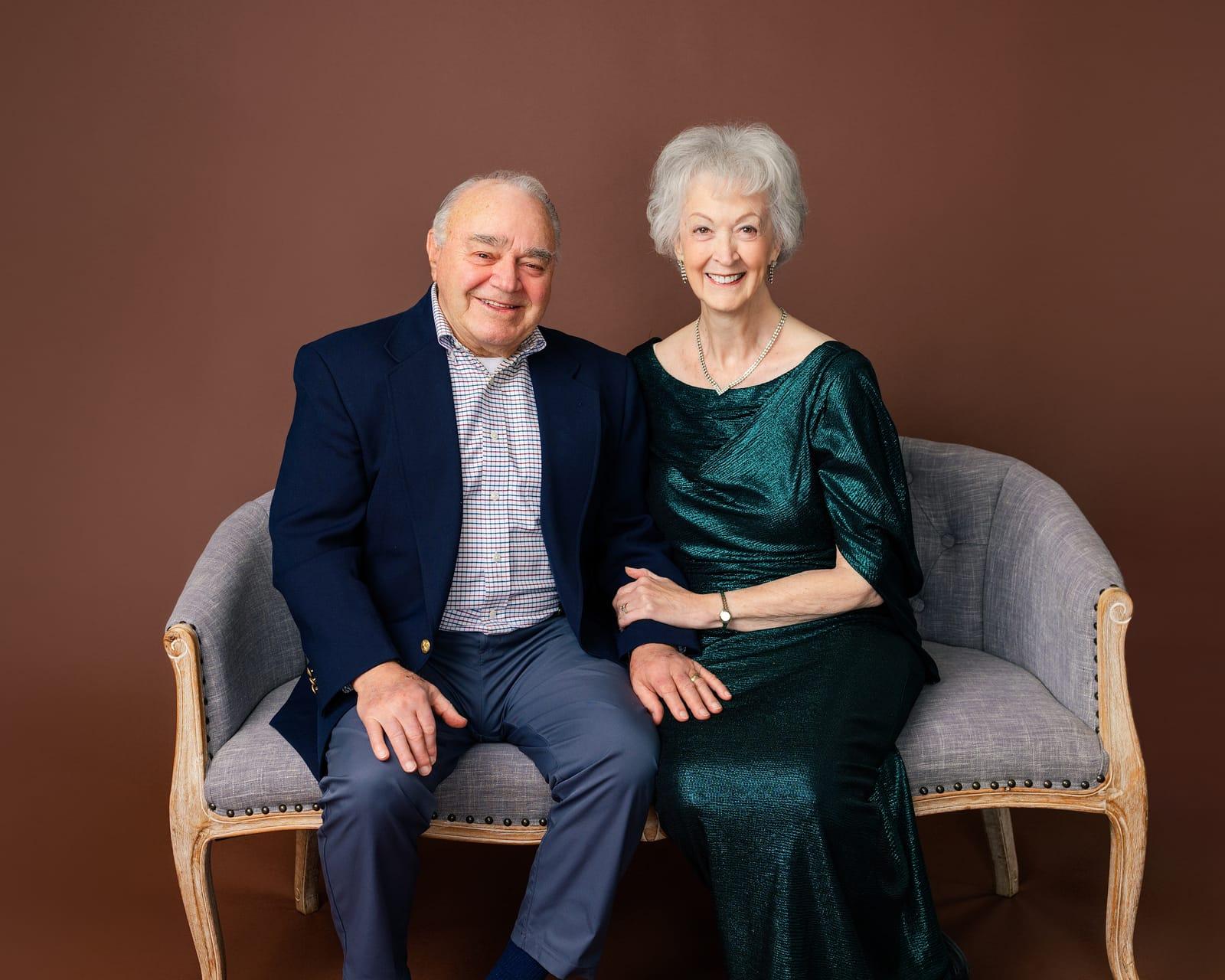
Most of the envelopes you address go to the people who would most like to be standing in the photograph. The holidays are the one stretch of the year when they usually are — grandparents visiting, cousins flown in, siblings in the same county for the first time since summer. That window is short and it does not come back around for another twelve months.
If your family will be together anyway, it is worth photographing while they are. An extended-family session needs more time than a party of four, because every grouping multiplies: everybody, grandparents with all the grandchildren, each household on its own, the siblings, the couples. My guide to three generation family photos covers booking around the people who travel, the running order that gets every grouping photographed before the youngest one is finished, and dressing three generations without matching them.
The dog counts as family here too. If yours is going in the card, my guide to family photos with dogs covers why we photograph the dog first, why someone has to be on leash duty just out of frame, and what everyone wears around a shedding coat.
Where Card Sessions Happen in the Fall
The coast. A card photographed on the Central Coast looks like nowhere else, and that is most of the point when half your list lives somewhere with snow on the ground. The wind usually drops in the last hour before sunset, which is also when the light is best — my beach family photo tips cover how the tide decides how much sand we get to work with and what to settle about the water before you arrive. Sessions run in Pismo Beach and Avila Beach, San Luis Obispo, and Arroyo Grande.
Oak country and vineyards. Inland, the light stays warm later into the fall and the color turns golden rather than green. It is the better choice for families who want the card to feel like autumn instead of summer, and for anybody whose toddler and the Pacific are a bad combination. There are dedicated pages for Paso Robles and Nipomo.
The studio. A clean backdrop is the most card-friendly background there is, because it gives a designer somewhere to put the type and it looks identical whatever December does with the weather. It is also the easiest setting for babies, for large groups, and for anybody booking late enough that daylight has become the problem. In-studio family photography in Grover Beach runs year-round, in any weather, at any hour we like.
Two Details Nobody Plans For
What everybody wears
Resist the matching holiday sweaters. A card photograph outlives the season it was made for, and themed outfits pin it to one specific December in a way nobody enjoys a decade later. Build a palette of deeper seasonal tones instead — forest, navy, cream, camel, rust, charcoal — and let each person wear their own version of it. There is a second, purely practical reason: a card design has to sit on top of the photograph, and a family dressed in six competing colors leaves a designer nowhere quiet to put the words. My full guide to what to wear for family photos walks through building the palette, coordinating without matching, and dressing children for the camera.
The envelope is part of the decision
Card shape is usually chosen for looks alone, and then the postage bill arrives. The Postal Service treats a card as a letter only if the envelope is no more than 11-1/2 inches long by 6-1/8 inches high, with contents no thicker than a quarter of an inch. Envelopes that are square, or taller than they are wide, or rigid and lumpy, are classed as nonmachinable and currently cost $0.49 more each to send.
On a list of a hundred and fifty families, that is a real number, and it is entirely avoidable: a standard horizontal card in a standard envelope sits comfortably inside the letter limits. If you have your heart set on the square one, choose it knowingly rather than discovering it at the counter. We settle the shape at the design appointment, before anything is printed.
Holiday Card Session Questions
Let's Get Your Cards in the Mail on Time
Tell me who is in the picture, where you would like to be photographed, and the date the cards need to leave your house. We will plan the session backwards from there.
Plan Your Card Session