
Farm Family Photography on the Central Coast
Most farm families have plenty of pictures of the operation and almost none of themselves. There are photographs of the herd, the harvest, the new tractor and the field after a good rain — and then one picture of everybody together, taken at a wedding, eleven years ago. A farm family portrait fixes that, and it does it in the one place that actually explains who you are.
I am Amy Marlan. My own roots are in agriculture — my grandfather was a farmer and I spent countless hours on his ranch growing up — and with 20+ years of photography experience I photograph families on their own ranches, farms and vineyards across the Central Coast. Not posed on a lawn in matching shirts. On your ground, with your animals, in the hour when the light comes sideways across the hills.
Plan Your Farm Family Session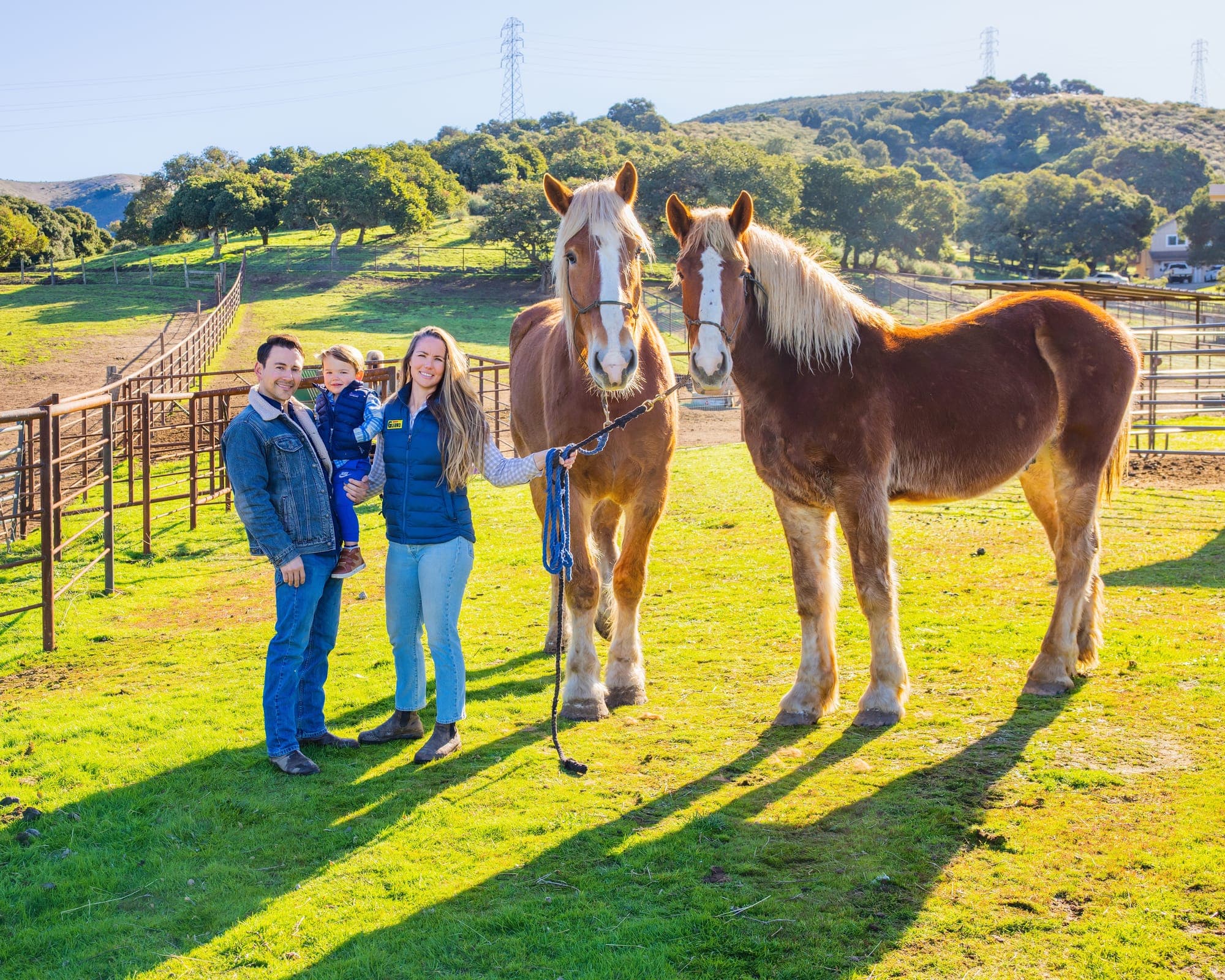
What Makes a Farm Family Portrait Different
It is a family session in the ordinary sense — the groupings, the direction, the finished artwork are all the same. Three things about it are not.
The Place Is Not a Backdrop
At a park or a beach, the location is scenery — pretty, interchangeable, and not really about you. On your own ground it is the opposite. The fence line your grandfather set, the barn that has been patched four times, the oak the kids have climbed since they could walk: those are not background, they are the subject. Thirty years from now the family will look at the picture and name the field.
The Work Belongs in the Frame
I am not looking for a manicured set. Boots that are actually muddy, a dog that will not sit still, the truck parked where it always is — that is what makes the photograph true, and it is what people recognize later. I never ask anyone to stage something that is not real, and I never get in the way of work that has to be done.
The Animals Count as Family
The horse, the cattle dog, the show steer, the barn cat who runs the place. I have photographed cattle, horses, working dogs, sheep and goats, I am comfortable around large animals, and I follow your lead on handling and safety. If an animal is part of your family's story, they belong in the portrait rather than waiting in a pen.
There is a fourth difference that nobody mentions until the day itself. Agricultural families are, as a rule, not comfortable being photographed. They are used to being the ones doing the work while somebody else is the subject, and the first twenty minutes usually involve a lot of standing stiffly and apologizing for their hands. That is normal, I expect it, and it is my job to carry it — which is mostly a matter of putting people to work doing something real instead of asking them to stand still and smile.
Where on the Property We Photograph
Families usually suggest the prettiest view on the place. It is often the wrong answer. The view is what a visitor would photograph; what you will want in twenty years is the working heart of the operation — the corrals, the shop, the barn alley, the row you planted first, the gate everyone drives through four times a day.
In practice I build a session out of three or four spots that are deliberately different from each other: somewhere open with the land behind you, somewhere built and lived-in with real texture, somewhere with the animals, and one quiet place that belongs to your family specifically. That combination gives you a set of images that works together on a wall instead of four versions of the same photograph.
The honest constraints are worth saying out loud. Power lines, transmission towers and the neighbor's silage pile are everywhere on productive ground and they do not disappear in editing as cleanly as people hope — they are far easier to compose around than to remove. Hard midday sun on an open hillside is the least flattering light of the day. And the places that work best in the evening are often the opposite of the places that work best at dawn, which is why we decide the route before we start rather than wandering.
How a Farm Family Session Runs
- 1
A planning conversation first
Who is coming, which animals are coming, what the operation looks like at that time of year, and what you actually want on the wall at the end. I ask about the places on the property that mean something to your family, because those are rarely the places a stranger would pick.
- 2
A walk of the property
When the distance allows, I would rather see the place before the day than discover it at golden hour. Where the light lands in the evening, which gate frames up well, where the power poles are, which direction the hills fall away — twenty minutes of walking saves an hour of the session.
- 3
A short preparation list
Nothing elaborate. Trash and obvious clutter cleared from the areas we will use, equipment and vehicles parked intentionally rather than removed, and the animals where you want them when we start. I send a checklist built around your property and the shots we talked about.
- 4
The session, worked around your day
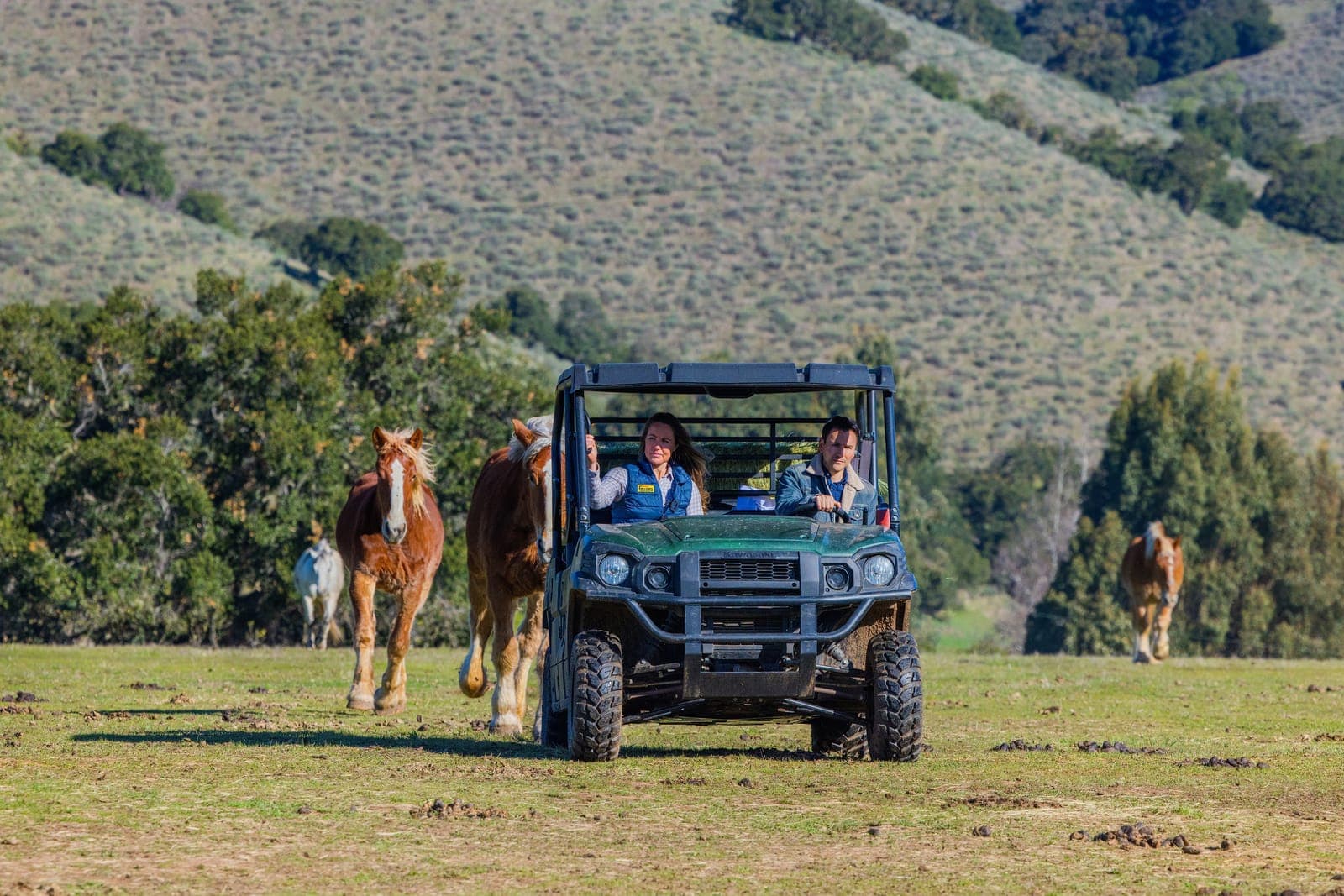
Ranch work does not stop for a photo session, and I plan around it rather than against it. If the cattle need to be moved, I follow. If the only hour that works is the first one after sunrise, that is usually the best light anyway. We start with the whole family together while everyone is clean and patient, then work outward to the smaller groupings.
- 5
The pieces nobody asks for and everybody keeps
The hands. The brand on the gate. A child being handed the reins. The parents walking away from the camera down a row. These frames take five minutes at the end of a setup and they are almost always the ones that end up in the album.
- 6
The reveal
About two to three weeks later you come to the Grover Beach studio to see the images for the first time on a large screen, and we design the finished artwork together. For most farm families that means something sized for a wall in the house that is actually theirs, rather than a folder of files that never gets opened.
Timing It Around Your Year, Not Mine
Every other kind of portrait session gets scheduled around the family's convenience. This one gets scheduled around the operation, and pretending otherwise is how a session ends with everybody exhausted and nobody looking like themselves. Tell me what your year looks like — calving, lambing, shearing, bloom, harvest, the weeks when the whole family is in the field until dark — and we will find the window on the other side of it.
Within that window, the Central Coast offers two genuinely different landscapes and families are often surprised by how strong the difference is. Late winter and early spring give you green hills, soft light and new growth. Summer into fall gives you the dry golden country this region is known for, with far more contrast and drama. Neither is the right answer. If your family photographs more than once over the years, having one of each on the wall tells the truer story of what the place is.
The hour matters more than the month. The first hour after sunrise and the last hour before sunset carry the warm, directional light that makes a landscape feel alive, and on open ground the difference between golden hour and two in the afternoon is not subtle. I go into the seasonal picture in more detail in my guide to the best time of year for outdoor photos, which has a month-by-month breakdown for this region.
Why This One Is Worth Doing Sooner
I would rather give you the numbers than a sentiment. In the USDA's 2022 Census of Agriculture county profile for San Luis Obispo County, there were 2,184 farms — down 7% from 2017 — working 921,300 acres, with the average operation 6% larger than it was five years before. Of the county's 4,347 producers, 2,032 were 65 or older and 258 were under 35. Ninety percent of the farms here are family farms.
Read those together and the picture is plain: fewer operations, bigger ground, and a generation doing the work who are mostly past retirement age. Nationally the same census put the average age of all producers at 58.1, and found that family-owned and operated farms account for 95% of U.S. farms and operate 84% of the land in farms.
None of that is a reason to be gloomy about it. It is a reason to put it on the calendar this year rather than the year after next — while the people who built the place can still stand in the middle of it, and while the place still looks the way they built it. That is the one part of this job I feel most strongly about, and it is why I started photographing agriculture in the first place.
What Your Family Receives
This is a full-service session, which means it does not end with a gallery link. We design the finished pieces together at your reveal and I handle the production.
Wall Art for the House
The portrait printed, framed or finished as canvas, and sized for the wall it is going on. A farm family portrait that lives in a hard drive is not doing the job it was made for.
A Designer Album
The full set — the groupings, the animals, the hands, the land — laid out as a book with thick lay-flat pages. This is the piece that gets handed down, and the one grandchildren pull off the shelf.
A Companion Digital Image
Every portrait pose you select as artwork comes with a companion phone-size digital image, so the picture can go straight to the family who live three states away and the cousins who could not get there.
If you are weighing up how the pieces work, my guides to canvas prints versus framed photographs and albums versus photo books cover the honest differences, and wall art and products shows what is available. The whole process, from the first conversation to the reveal appointment, is laid out on the experience page.
Before the Day
A farm family session is still a family session, and the ordinary preparation still applies. My guide to what to wear for family photos covers building a palette that holds together across a group, and how to prepare kids for family photos is worth reading if there are young children coming — a property full of animals and equipment is thrilling for a four-year old, which is both an advantage and a scheduling problem. If the cattle dog is coming, family photos with dogs explains the handler arrangement that makes it work.
If what you actually need is images of the operation rather than the family — magazine editorial work, crew and lifestyle photography, product images for a label or a tasting room — that is agriculture and ranch photography, and matched portraits of everyone who works for you are covered on team headshots. For families who would rather photograph at the coast or in the studio instead, family photography covers the other locations across the Central Coast.
Farm Family Photography Questions
Let's Photograph Your Family on Your Own Ground
Tell me about the place, who is in the family, and what your year looks like. We will find the window, and we will make something worth handing down.
Plan Your Farm Family Session